
Are you trying to implement bulk purchasing strategies for stage lighting equipment? You want to avoid expensive mistakes. It’s essential to balance price, quality, and supplier reliability. LED technology and moving head lights are crucial in today’s market. Many venues and event planners are opting for LED instead of traditional lighting. They make this switch because LED systems save energy and are more cost-effective to maintain. The table below explains why buyers choose LED stage lights for events and business functions:
| Trend | Key Reason |
|---|---|
| LED adoption in stage lighting | Better lighting, energy efficiency, smart tech |
| Growth in Asia Pacific | More live events and entertainment investments |
| Use in corporate events | Professional results for business gatherings |
Before you buy, set your goals and consider your bulk purchasing strategies. Make a list of your technical needs.
Key Takeaways
- Decide what equipment you need before you buy. Know what kind of lighting each event and place needs.
- Make a clear budget and set your goals. Figure out how much money you can use and what you want your lights to do.
- Pick the most important features and check compatibility. Make sure the lights fit your space and work with what you already have.
- Use bulk buying to save money. You get discounts and make ordering easier when you buy more at once.
- Check suppliers closely. Find ones that are reliable, give good quality, and help you after you buy. This will help you have a good purchase.
Bulk purchasing strategies overview
If you want to buy a lot of stage lighting equipment, you need a good plan. Bulk purchasing strategies help you save money and avoid mistakes. They also help you get the right equipment for your venue or business. These strategies are important for venues, productions, and resellers. They help you meet your technical needs and stay on budget. They also help your events run well. If you plan carefully and set goals, your money will be well spent.
Define equipment needs
Start by knowing what your venue or event really needs. Different events need different lighting setups. A concert needs strong moving heads and effects. A business event may need softer, focused lighting. The size and shape of your venue matter too. Big spaces need lights that shine farther and cover more area.
Here is a table to help you find the main things to think about:
| Factor | Description |
|---|---|
| Type of Event | Plays, concerts, and presentations each need special lighting. |
| Venue Size and Layout | The space changes how far and wide your lights need to shine. |
| Planning and Objectives | Set creative goals and know your limits to pick the right lights. |
| Venue Survey | Measure the stage and check power to stop problems later. |
| Fixture Selection | Pick lights for the front, side, back, or for effects. |
You can be more accurate by looking at what you bought before. Here is an easy process to follow:
- Look at old orders to see if you bought too much or too little.
- Compare prices to find better deals.
- Check if suppliers sent things on time and as promised.
- Change your orders based on what you really used.
- Use what you learn to get better prices.
- Work with suppliers to fix any problems.
- Make your storage and handling better if you had trouble before.
Set budget and goals
Making a budget is a big part of bulk purchasing strategies. You need to know how much you can spend and what you want to do. Start by looking at your current lighting. Find any old or bad fixtures that need to be replaced. Plan your budget by thinking about equipment, setup, control systems, and future repairs.
Here is a table that shows common budgets and what you can get:
| Budget Level | Expected Equipment | Best For |
|---|---|---|
| Starter Budget — Under $500 | 2 basic PAR lights, 1 small moving head, simple controller, basic stands | New DJs, home setups, small private parties |
| Mobile DJ Budget — Around $1,000 | 2 moving heads, 2 supporting PARs, decent controller, cables, totems/tripods | Mobile DJs, bars, lounges |
| Wedding/Event Pro — $1,500–$2,000 | 4 moving heads, strong wash coverage, beam effects, cases for transport | Weddings, events with photography |
| Small Venue/Stage — $3,000+ | High-output fixtures, multi-angle coverage, truss or mounting systems | Permanent installs, live performers |
You should also set clear goals for your purchase. These goals could be to sell more, make customers happier, or get better reviews from event clients. Watch your progress with things like sales numbers and customer feedback.
Prioritize features and compatibility
When you buy a lot at once, focus on the most important features. The right features make your lighting system work better and last longer. Start by looking at your venue’s size and shape. Make sure your lights fit and cover the space well.
Here is a table of important features and things to check:
| Feature/Factor | Description |
|---|---|
| Venue Dimensions | The size and shape of the venue decide how many lights you need. |
| Control System Compatibility | Make sure your lights work with digital control systems like DMX512. |
| Power Requirements | Check your venue’s power. LED lights use less energy. |
| Budget Constraints | Your budget changes what you can buy. Versatile lights often give you more for your money. |
| Portability and Installation | For mobile setups, pick lights that are light and easy to set up. |
Check if new lights will work with your current system. You can use LED replacements with your old console. New LED lights may need you to learn about DMX addressing. Always check if your lighting console can use new features before you buy.
Tip: Make a checklist of must-have features like LED, moving head, DMX512 support, high brightness, and good color accuracy. This helps you compare choices and not buy the wrong equipment.
If you follow these bulk purchasing strategies, you can make smart choices, avoid big mistakes, and get the best results for your venue or business.
Benefits of bulk buying

Cost savings and discounts
Buying a lot of stage lighting equipment at once saves money. Suppliers give you lower prices when you order many items together. This helps you get more for your money. Many people see that buying in bulk from Alibaba is cheaper than buying one at a time from Amazon. You can also get special deals and discounts for big orders. These deals are not for small orders. Here are some ways you can save:
- Volume-tiered contracts can cut your total price by 12-30%.
- Sustainability incentives can save you another 5-15%.
- Longer payment times help you handle your money better.
These savings make bulk buying a smart idea for venues, event planners, and resellers.
Streamlined logistics
Buying in bulk makes it easier to handle your equipment. You can plan when things arrive and where to store them. This lowers the chance of missing items or late deliveries. Bulk buying also gives you more control over shipping and storage. The table below shows some main benefits for logistics:
| Efficiency Type | Description |
|---|---|
| Energy Savings | Bulk buying lets you pick energy-saving models and pay less for power. |
| Total Cost of Ownership (TCO) | You pay less for buying, using, fixing, and throwing away lights when you buy in bulk. |
| Operational Considerations | Planning for big orders and local storage makes things work better. |
You can also pick energy-saving models, which cost less over time.
Supplier relationships
When you buy a lot and come back for more, suppliers notice you. They might give you faster service and fill your orders first. You can also get special prices and even help with marketing. Here are some good things you might get:
| Benefit | Description |
|---|---|
| Priority Production Slots | Suppliers give loyal buyers faster production for their orders. |
| Exclusive Pricing | People who buy in bulk get special prices others do not get. |
| Co-branded Marketing Support | Suppliers may help with marketing for loyal buyers, making them stand out. |
You build trust with your supplier, which can lead to better deals and easier orders later.
Price-quality ratio
Key quality metrics (lumens, CRI, durability)
When you buy stage lighting in bulk, you need to look at more than just the price tag. Quality matters. Three main metrics help you judge the value of lighting equipment: lumens, CRI, and durability. Lumens show how bright a light is. High lumens work best for large venues or shows that need strong lighting. CRI, or Color Rendering Index, tells you how true colors look under the light. A high CRI means your stage colors will look accurate and vibrant. Durability affects how often you need to fix or replace your lights. Good fixtures may cost more at first, but they save you money over time because they last longer and need less maintenance.
| Metric | Influence on Purchasing Decisions |
|---|---|
| Light Output (Lumens) | High lumens indicate brighter lighting, essential for large venues and demanding performance needs. |
| Color Performance | High CRI ensures accurate color reproduction, crucial for stage lighting design. |
| Maintenance Costs | Quality fixtures may have higher upfront costs but lower maintenance costs, enhancing long-term value. |
Cost per lumen-hour
You can compare lighting options by looking at the cost per lumen-hour. This metric shows how much you pay for each unit of brightness over the life of the fixture. To find it, divide the total cost of the light by the product of its brightness (in lumens) and its lifespan (in hours). Lower cost per lumen-hour means better value. This helps you spot which lights give you the most brightness for your money. You avoid cheap lights that burn out fast or do not shine bright enough for your needs.
Tip: Always check both the rated lifespan and the actual brightness. Some lights look cheap but cost more in the long run because you need to replace them often.
LED and moving head light considerations
You face a choice between LED and moving head lights. Each type has strengths and weaknesses.
- LED lights last a long time—often between 15,000 and 50,000 hours. You will not need to replace them often, which saves money.
- Moving head lights usually last only 1,500 to 2,000 hours. You may spend more on replacements and repairs.
- Moving head lights give you more effects and flexibility. They can move and create dynamic looks, but they need more care and technical skill.
If you want lower costs and less maintenance, choose LED fixtures. If you need special effects and do not mind extra upkeep, moving head lights may fit your needs.
Pricing structures and hidden costs
Tiered pricing and volume discounts
When you buy lots of stage lighting equipment, prices can change. Suppliers use special ways to help you save money. These ways also help you plan your spending.
- Lower prices for bigger orders make you want to buy more.
- You can guess your costs better, so planning is easier.
- Buying more at once gives you a better price for each item.
Here is a table that shows how different pricing works and what it means:
| Pricing Strategy | Description | Impact on Final Cost |
|---|---|---|
| Tiered Discounts | You get discounts only for items above certain amounts. | This helps you grow slowly and rewards bigger orders without big price jumps. |
| Volume Discounts | You get a discount on everything after you buy enough. | It is simple but can make prices change quickly, which makes planning harder. |
| Tiered Volume Discounts | Mixes both ways, giving tiered discounts to all items you buy. | It is easy to understand and helps you save more when you buy a lot. |
Tiered pricing means you save more when you buy more. This way, you get better deals for bigger orders.
Hidden costs (shipping, taxes, compliance)
Buying in bulk can have extra costs you might not see at first. You need to look past the price tag. Shipping, taxes, and rules can make things cost more.
| Cost Component | Direct Import Scenario | Domestic Warehouse Scenario |
|---|---|---|
| Factory / Wholesale Price | $50.00 | $68.00 |
| International Freight, Insurance & Fees | +$12.00 | Included |
| Tariffs & Duties (e.g., 25%) | +$12.50 | Included |
| Customs Brokerage | +$2.50 | Included |
| True Landed Cost | $77.00 | $68.00 |
You should also check these things:
- Certifications: Make sure your lights have the right approvals.
- Sample testing: Ask for samples to check brightness and color.
- Third-party lab tests: Use labs to check big orders for rules.
- Factory audits: Visit or check the factory for quality and size.
Note: If you import directly, it can take a lot of time. You may need to handle shipping and customs by yourself.
Total cost of ownership
Think about more than just the price you pay first. The total cost of ownership (TCO) shows what you really spend over time. Here is a list of things to think about:
| Component | Description |
|---|---|
| Purchase price | The money you pay to buy the equipment. |
| Operational costs | Money spent on power and using the lights. |
| Maintenance & repair | Costs to fix and keep your lights working. |
| Downtime costs | Losses when your lights do not work right. |
| End-of-life costs | Money for throwing away, recycling, or selling. |
When you look at TCO, you make better choices. You can avoid cheap lights that cost more later. Always add up all these costs before you buy.
Negotiation tactics
When you buy a lot of stage lighting equipment, you can use smart ways to get better deals. You do not need to take the first price you hear. You can ask for changes so the deal fits your needs and budget.
Requesting direct quotes
Always ask different vendors for their prices. This helps you see what each one offers. You can compare prices, services, and payment rules. For example, you might get quotes like these:
| Vendor | Stage & Sound Package Price | Included Services | Notable Terms |
|---|---|---|---|
| StagePro Ltd. | $95,000 | Stage, basic lighting, crew for setup/tear-down | 50% deposit, balance net 30 days; overtime billed |
| Rockin’ Stages Co. | $110,000 | Stage, advanced lighting, sound, full tech crew | 30% deposit, balance on event day; 1 extra day rental |
| Local StageWorks | $85,000 | Stage only (no lights or sound); client provides crew | 20% deposit, balance net 15; no technical staff |
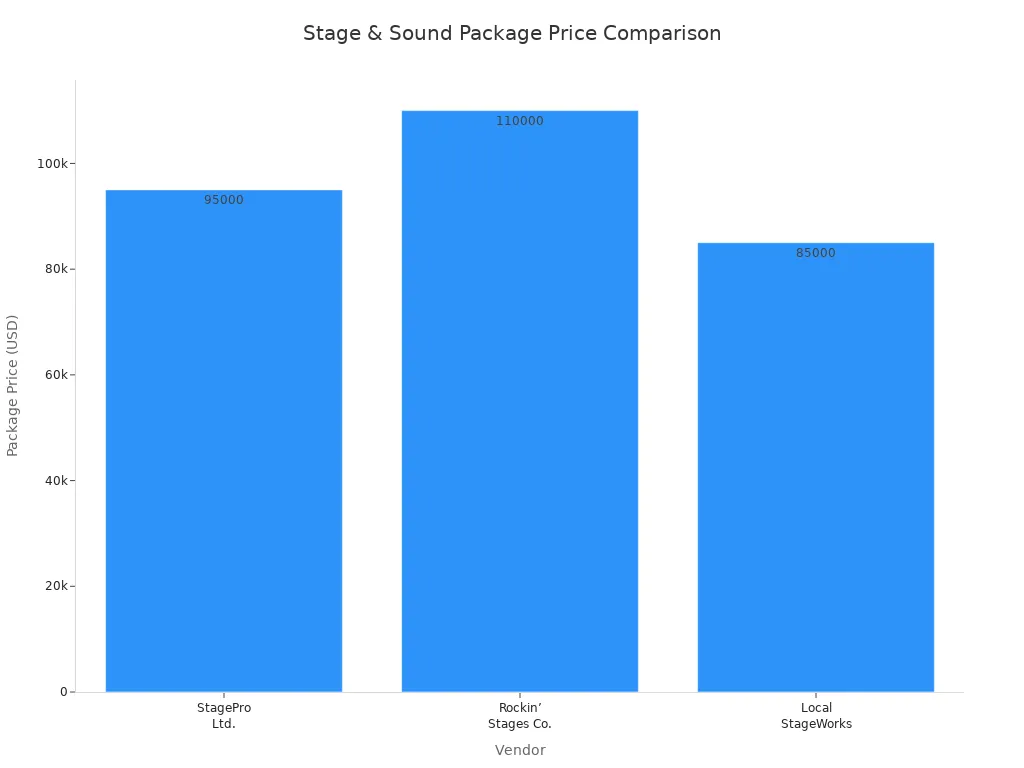
Look at what each quote gives you. Some vendors give more help or better payment rules. You can use this to ask for a better deal.
Tip: Be polite and clear when you talk to suppliers. This helps them trust you and makes deals easier.
Leveraging competing offers
You can use prices from other vendors to help you. Show one vendor a better price from someone else. This can help you get a lower price, better payment rules, or more services. Here are some ways you can do this:
| Strategy | Description |
|---|---|
| Lower Prices | Use bulk buying to ask for discounts not given to smaller buyers. |
| Improved Terms | Negotiate for longer payment periods or better service levels. |
| Broader Products | Ask for access to more products or special features. |
You do not have to take the first deal. If you do not like it, you can say no and look for a better one. This shows you know what you want.
Securing value-added services
You can ask for more than just a lower price. Value-added services make your deal better. These can be free training, longer warranties, or help with setup. Suppliers often give these extras to people who buy a lot.
- Value-added services help you and the supplier work together.
- These extras can help you get better deals next time.
- Good relationships make it easier to fix problems fast.
Note: When you ask for more value, you get more than just lights. You get help and new ideas that help your business grow.
Supplier evaluation
Picking the right supplier for stage lighting is important. You want to choose companies you can trust. Good suppliers help your events go well. They also help your business stay strong.
Reliability and reputation
Always check if a supplier is reliable and has a good name. Reliable suppliers send products on time. They give you good quality items. They help you fix problems fast. Here is a table that shows what you should look for:
| Criteria | Description |
|---|---|
| Verifying certifications | Makes sure products are safe and high quality. |
| Ensuring reliability | Checks if the supplier’s products and services work well. |
| Prioritizing performance metrics | Looks at how well the equipment works. |
| Product quality | Checks if the lighting equipment is strong and lasts long. |
| Technical support | Gives help during events if something goes wrong. |
| Timely delivery | Sends equipment when you need it so your event is not late. |
| Compliance with safety standards | Makes sure products follow safety rules. |
You can ask other people about their supplier. You can read reviews online. If many customers are happy, the supplier is usually a good pick.
Quality assurance and standards
Quality assurance keeps your equipment safe and working longer. Check if the supplier follows important rules. These rules protect your team and your audience. Here is a table with key standards:
| Category | Standard Description |
|---|---|
| Electrical Safety | IEC 60598-1 tells how lighting fixtures should be made and work. |
| National Standards | Each country has its own rules, like China’s GB 7000.1 for lights. |
| Mechanical Safety | Fixtures should be strong and keep out dust and water. |
| Thermal Safety | Good heat design stops lights from getting too hot. |
| Optical Safety | IEC 62471 makes sure lights are safe for eyes and skin. Anti-glare helps people feel comfortable. |
| Environmental Safety | Rules like the EU’s RoHS help stop pollution from lighting equipment. |
Always ask for proof that the supplier follows these rules. This helps you avoid unsafe or bad products.
After-sales support
After-sales support helps you use your bulk purchase better. Good suppliers do more than just sell you lights. They help you fix problems and keep your lights working. Look for these kinds of support:
| Support Option | Description |
|---|---|
| Training and Technical Documentation | Training and guides for setting up and using your lights. |
| Promotional Event Support | Help with events to show off your products. |
| Inventory Planning | Advice for keeping enough lights in stock. |
| Real-time Problem Solving | Fast help if something goes wrong while using the lights. |
You should also look for:
- Technical support
- Training for users
- Help with repairs and returns
- Ways to give feedback
- Loyalty rewards
A supplier with good after-sales support helps you avoid problems. They help your business run smoothly.
Best practices for bulk purchasing
Purchase checklist
You can stop expensive mistakes by using a simple checklist. Experts say you should do these things:
- Try to get better prices if you buy more units.
- Ask for details about warranty and support.
- Check how long it takes to get your order. Make sure the supplier knows how to ship to other countries.
- Make sure the warranty covers what you need. Ask if you can get spare parts.
- Look at the supplier’s rules for returns.
A checklist helps you stay on track and feel sure about your choices. You should find suppliers who sell many types of equipment. Pick ones with a good history. Good suppliers help you avoid bad equipment that can mess up your event.
Documenting agreements
You should keep records of every deal you make. Written deals protect you and stop confusion. Always ask for quotes that show the price for each item. Make sure your contract says when you will get your order, what the warranty covers, and how returns work.
Tip: Keep all your emails, signed papers, and payment slips together. This helps you fix problems if they happen later.
Here is a table of important things to write down:
| Agreement Detail | Why It Matters |
|---|---|
| Itemized Pricing | Shows exactly what you pay for each item |
| Delivery Schedule | Helps you plan your event setup |
| Warranty Terms | Protects you if equipment fails |
| Return Policy | Lets you return or exchange faulty items |
| Support Contacts | Gives you quick help if you need it |
Planning for upgrades
Stage lighting changes fast. You should think about upgrades when you buy a lot. Pick equipment that works with DMX512 and has new features. This makes it easy to add new lights later.
Ask if the supplier can give you spare parts and help with problems. Suppliers with local help can fix things faster. Planning for upgrades keeps your lights up-to-date and working well.
- Pick suppliers who make new products and have strong factories.
- Look for clear prices so you do not pay extra fees.
- Choose equipment that can grow with your needs.
If you use these best practices, you can make smart choices and get the most from your bulk purchases.
You can make smart choices with bulk purchasing strategies for stage lighting equipment. Use these steps to get the best results:
- List your needs and set a clear budget.
- Compare suppliers for price, quality, and support.
- Choose LED lights for long life and energy savings.
- Ask for direct quotes and better deals.
Talk to experts or start checking suppliers today. You will save money and improve your events.
FAQ
What is the best way to compare different lighting suppliers?
You should make a table. List each supplier’s price, warranty, delivery time, and support. This helps you see which one gives you the best value.
How do I know if my new lights will work with my old system?
Check if your new lights support DMX512 or your current control system. Ask the supplier for a compatibility chart. Test one light before you buy many.
Can I get a better price if I buy more lights?
Yes! Most suppliers offer discounts for large orders. You should always ask for a quote and mention your order size. This can save you money.
What should I do if a light arrives damaged?
Contact your supplier right away. Take photos of the damage. Keep all packaging. Most suppliers will replace or fix the item if you report it quickly.
How often should I upgrade my stage lighting equipment?
You should review your lighting every 3–5 years. LED technology changes fast. Upgrading helps you save energy and get better effects for your shows.
