
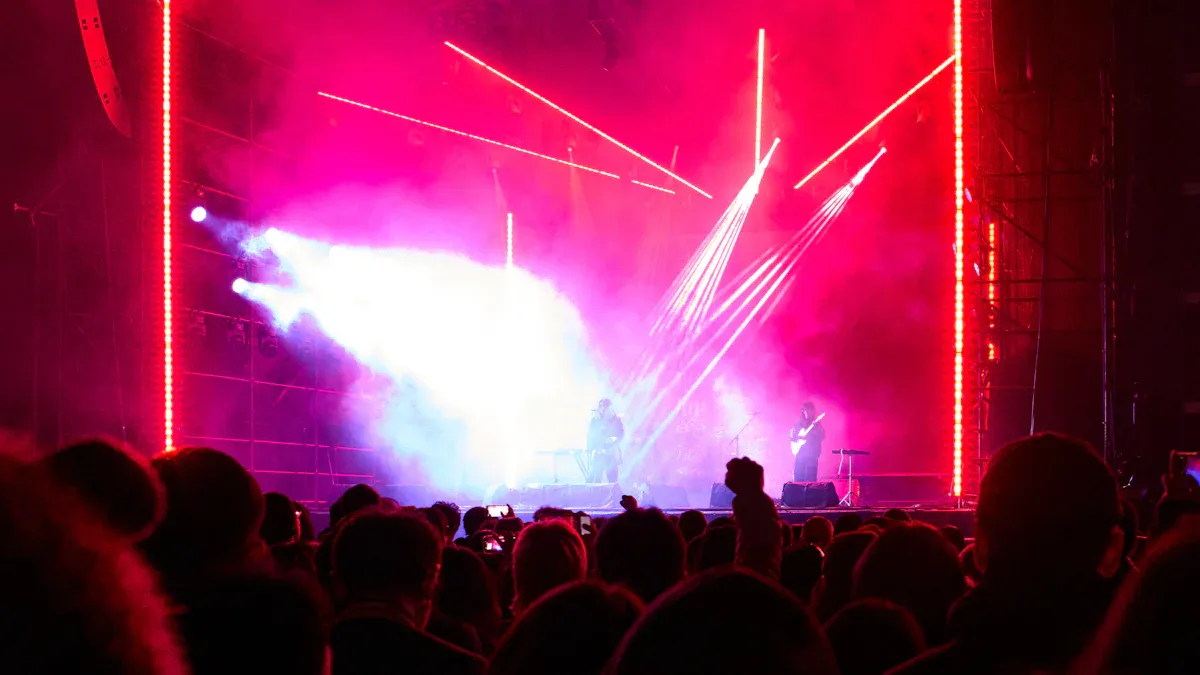
You know that lighting selection can make or break a concert. Great lighting grabs the crowd’s attention, helps everyone see the performers, and sets the mood. Want your next show to shine? You’ll find tips and real stories that help you pick the right lights.
Key Takeaways
- Pick good lighting to make the concert better. Use wash lights to set the mood. Use spotlights to show important things. Use moving heads to make things exciting.
- Work with venue staff and production teams to plan lights. Do a site survey to make sure your ideas fit the space.
- Make your lighting match the event’s theme and audience goals. Use colors and effects to create the right feelings and help the show.
Essential Lighting Selection Strategies
Why Lighting Selection Matters
You want your concert to stand out. Lighting selection plays a huge role in making that happen. The right lights can turn a simple stage into a stunning show. When you choose your lighting carefully, you help the audience feel connected to the performers. Lights do more than just brighten the stage. They guide the crowd’s attention, set the mood, and create excitement.
Lighting design shapes the whole experience. You can use different lights to make the audience feel like they are part of the show. Wash lights fill the space with color and set the atmosphere. Spotlights highlight the stars on stage. Moving heads add energy and movement. When you match your lighting selection to your event’s goals, you create a multisensory journey that everyone remembers.
Tip: Think about how you want people to feel during each part of the concert. Use lighting to help tell that story.
Key Elements of Effective Lighting
You need a plan before you start setting up lights. Top concert organizers always begin with a site survey. This helps you see what the venue can handle and what it needs. You should talk with the venue’s technical staff and the artists’ production team. Working together makes sure your lighting vision fits the space and the show.
Here are some key elements you should focus on:
- Collaboration: Work with everyone involved. Venue staff and production teams help you create a unified look.
- Planning: Visit the venue. Check rigging points and power sources. Know what you can and cannot do.
- Lighting Types: Mix wash lights, spotlights, and moving heads. Each type adds something special.
- Dynamic Cues: Change lights with the music. This keeps the audience engaged and adds emotion.
- Color Choices: Pick colors that match the music style. Bright colors can make people feel excited. Soft colors can create a calm mood.
- Energy Efficiency: Use LED fixtures when possible. They save power and work well in most venues.
You can also use a table to organize your lighting plan:
| Element | Why It Matters | How to Use It |
| Wash Lights | Set atmosphere | Fill stage with color |
| Fill stage with color | Focus attention | Highlight performers |
| Moving Heads | Add movement and excitement | Sync with music cues |
| Color Palettes | Evoke emotion | Match genre and theme |
| LED Fixtures | Save energy | Use for main and accent lighting |
If you want your concert to look professional, you need to adapt to the venue’s setup. Use backlighting and color to add depth. Always think about the size of the space. Small venues need different lights than big arenas. When you plan your lighting selection, you make sure every seat gets a great view.
Note: Good lighting does not just happen. You need to plan, talk to your team, and choose the right tools for the job.
Factors Influencing Lighting Choices
Venue Size and Layout
The size and shape of the venue are important. You should measure the space before choosing lights. Look at how the venue is designed. The number of lights depends on the venue’s layout. Some places need more lights to reach every area. Other venues need fewer lights. Different music styles need special lighting setups. The venue’s style also affects your choices.
- Measure the space and check the design.
- Figure out how many lights you need.
- Match the lights to the music and venue style.
Event Type and Performance Style
Think about what kind of event you have. Each event needs its own lighting plan.
- Meetings & Conferences: Use lights that help people see and talk.
- Stage and Theater: Pick lights that help tell stories and show feelings.
- Arena and Stadium: Use lights that can change for big events.
- LED PAR Lights: Good for concerts and trade shows.
- LED Pixel Tube Lights: Best for tech events.
- LED Uplights: Make the space look nice.
- Ellipsoidal Spotlights: Shine on speakers or performers.
- Moving Lights: Move with music for excitement.
Audience Experience Goals
You want the crowd to have a great time. Lighting helps make cool visuals and strong feelings. Choose colors and match lights with music. This makes the show fun and memorable. Lighting helps everyone feel part of the event.
Budget Considerations
Your budget helps you decide what lights to use. You need to think about cost and quality. Renting lights can save money. Always plan for setup and labor costs. Good budgeting helps you get great results without spending too much.
Types of Concert Lighting
Spotlights and Moving Heads
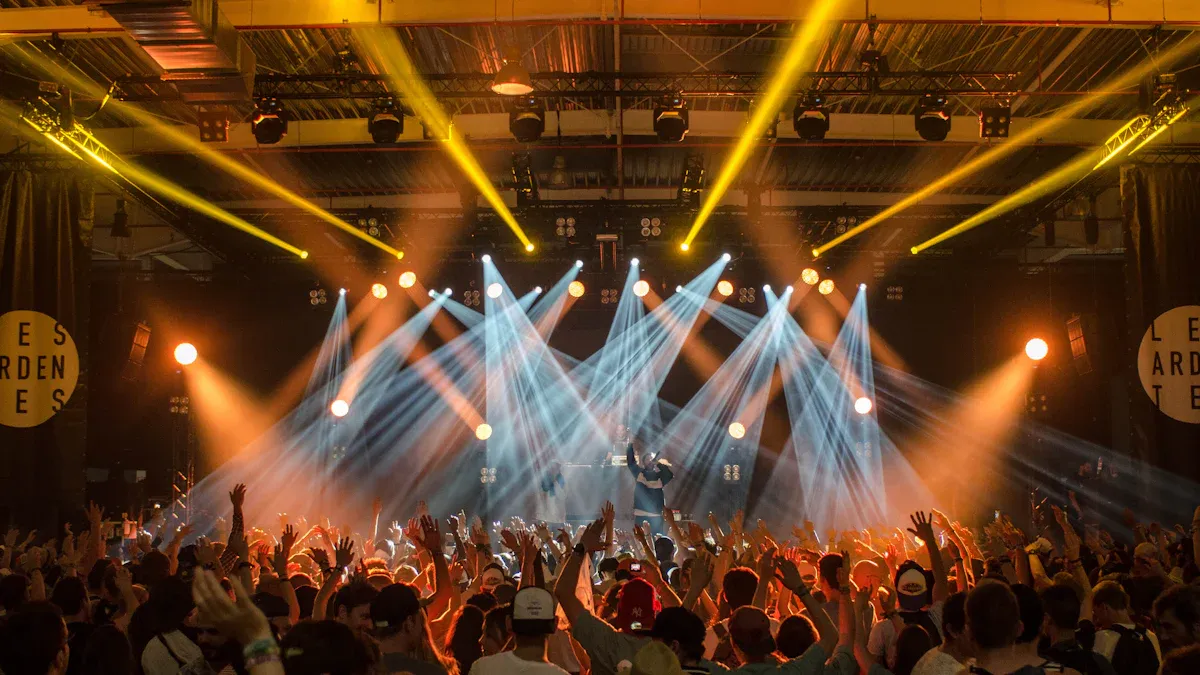
You want your performers to stand out. Spotlights and moving heads help you do just that. Spotlights shine a focused beam on a singer or musician, making sure everyone sees them. Moving heads take it up a notch. You can point them anywhere on stage, change their color, and even make them move with the music. These lights help you direct the crowd’s attention and keep the show exciting.
Tip: Try different angles and positions with moving heads. You can highlight solos or create cool effects during big moments.
Wash, Beam, and Strobe Lights
Wash lights fill the stage with smooth, even color. They work great for lighting up the whole band or setting the mood. Beam lights shoot sharp, narrow beams that look amazing in fog or haze. They add drama and depth to your show. Strobe lights flash quickly, creating bursts of energy that match fast songs.
- Wash lights: Best for even coverage and color blending.
- Beam lights: Perfect for sharp effects and stage depth.
- Strobe lights: Use for high-energy moments.
LED Fixtures and Panels
LED fixtures have changed the game for concerts. They use much less power than old-school lights and last a lot longer. You can save up to 70% on energy bills by switching to LEDs. These lights also stay cool and need less maintenance. LED panels let you create colorful backgrounds or display graphics that match your show’s theme.
| Lighting Type | Description | Typical Applications |
| Spotlights | Focused beams for specific areas or people | Highlighting performers |
| Floodlights | Broad, even coverage | Washing stages |
| PAR Cans | Simple, versatile lights | Concerts and live events |
| Moving Lights | Adjustable direction, color, and effects | Dynamic performances |
| Special Effects | Create dramatic visual effects | Enhancing atmosphere |
Modern Control Systems
Modern control systems make lighting selection easier and smarter. You can control zones, change colors, and dim lights with just a few clicks. These systems let you set up scenes for different songs or moments. You can even match the lights to your event’s branding or mood.
- Zoning and scene control for different stage areas
- Dimming for perfect brightness
- Color changing for creative effects
Note: Smart controls help you save energy and make your show look professional.
Lighting Placement and Design
Side and High Side Lighting
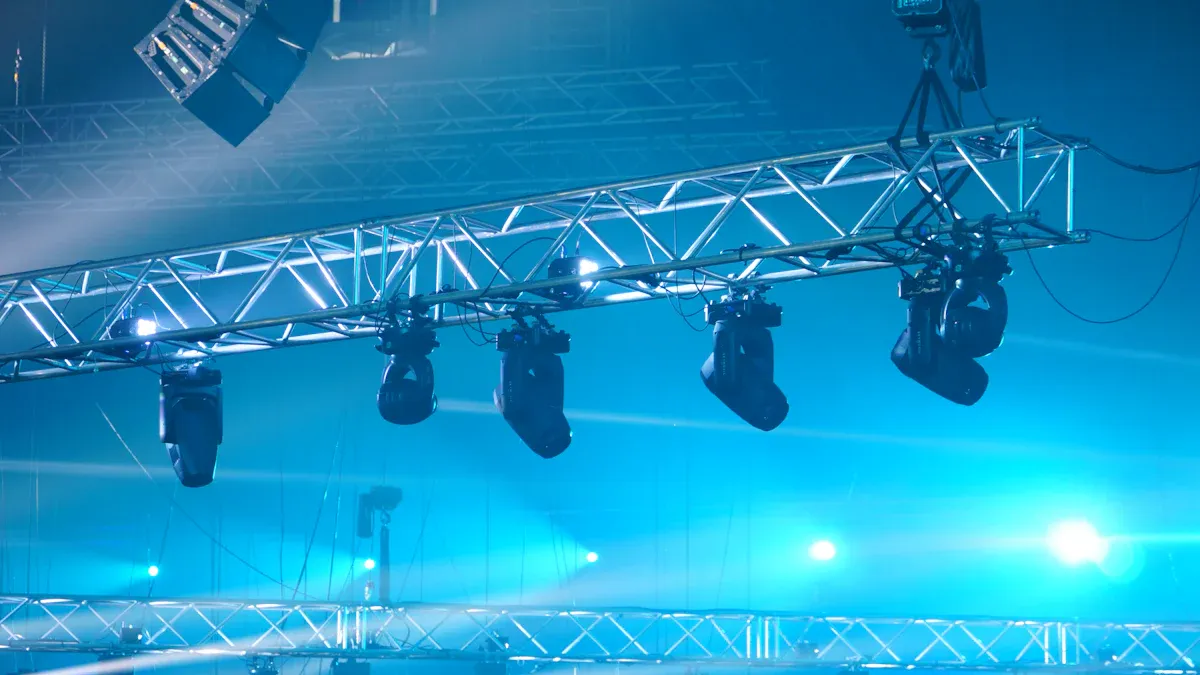
You want the performers to look great on stage. Side lighting helps everyone see the people on stage. It makes the stage look more real and lively. High side lighting shines down from above. This makes faces easy to see and shows every smile or frown. Using both side and high side lighting adds depth and makes the show more fun.
- Side lighting helps people see the performers.
- High side lighting makes faces stand out.
Tip: Mix side and high side lighting. This makes your stage look cool and keeps the crowd watching.
Color and Intensity Effects
Color and intensity can change how the concert feels. You can dim the lights or change colors to match the music. Jazz bands might use a color change to show a solo is starting. These effects help guide the crowd’s eyes and make special moments. Lights that change colors and patterns make the show feel lively and exciting.
| Effect Type | What It Does | Best Use Case |
| Color Shifts | Changes the mood and shows changes | Jazz, pop, rock concerts |
| Intensity Changes | Focuses attention and adds drama | Solos, big moments |
| Dynamic Patterns | Makes things exciting and moving | Dance, party scenes |
Combining Lighting Types
You get the best show when you use many kinds of lights. Spotlights, LEDs, moving heads, and floodlights all do something different. Mixing them helps you fit any event, like concerts or plays. You can tell stories with your lights and change things as the show goes on. This makes your event look pro and keeps people interested.
- Synchronized effects make the crowd excited.
- Mixing lights lets you do more and tell stories.
- Real-time control helps you change the look during the show.
Picking the right lights is about finding what works for your space and goals. When you use good placement, colors, and different lights, your concert will be special.
Aligning Lighting with Event Goals
Step-by-Step Lighting Selection
You want your concert lighting to match your event goals. Here’s a simple step-by-step process you can follow:
- Conceptualize: Think about your event’s theme, your audience, and what you want to achieve.
- Plan: Write down your lighting plan. Decide which lights you need and where you’ll put them.
- Collaborate: Talk with venue staff and vendors. Make sure everyone knows the plan.
- Set Up: Install your lighting equipment safely.
- Test and Adjust: Try out your lights in the space. Make changes if needed.
- Execute: Run your lighting during the event. Make real-time changes for the best effect.
- Review: After the event, look at what worked and what you can improve next time.
Tip: If you follow these steps, your lighting selection will help your concert stand out.
Matching Design to Theme
You can make your concert unforgettable by matching your lighting design to the theme. Check out this table for ideas:
| Key Considerations | Description |
| Focus on Performers | Use follow spots to keep the spotlight on your stars. Save big effects for special moments. |
| Emotional Experience | Pick lights that boost the mood and feelings of the crowd. |
| Atmosphere Adaptation | Change your lighting to fit the concert’s vibe, like Muse’s post-apocalyptic tour. |
| Dramatic Effects | Use powerful lighting for peak moments to make them pop. |
Working with Experts
You don’t have to do it all alone. Lighting professionals can help you create a concert that feels polished and exciting.
Successful lighting teams work together and communicate openly. Every member helps make the event a success.
- They help you engage your audience and highlight key moments.
- They keep things safe and make sure everyone can see.
- They offer creative ideas and new technology.
- They handle setup and operation, so you can focus on the show.
When you team up with experts, your concert lighting feels intentional and smooth. You get a better experience for everyone in the crowd.
Balancing Impact and Safety
Safe Installation and Operation
You want your concert to look great, but safety is most important. Always use the ANSI ES1.17-2025 standard for safe electrical work. Check all lighting and audio gear before the show starts. Keep emergency exits open and bright so people can get out fast. If your crew works up high, they must use guardrails and safety harnesses. Fire extinguishers and fire-proof materials help stop accidents. Teach your team how to handle emergencies and use equipment safely.
| Safety Measure | Description |
| Emergency Exits and Access Points | Mark exits clearly, keep them lit, and make sure first responders can reach them. |
| Pre-Event Equipment Inspections | Have trained people check lights and stage parts before the event. |
| Fall Protection | Use guardrails and harnesses for anyone working above the ground. |
| Sound and Lighting Checks | Make sure power systems can handle everything and have backups ready. |
| Fire Safety | Use fire extinguishers, fire-proof materials, and test wires often. |
| Performer and Crew Safety Briefings | Teach everyone about emergency plans and how to talk during a problem. |
Managing Power and Tech Needs
You need strong power and smart tech to run your lights. Write down every piece of gear that needs power. Work with the venue and AV team to plan where power goes. Spread your lights over different circuits so nothing gets overloaded. Use backup generators and UPS systems in case the power goes out. Good cable management keeps walkways safe and your setup neat. Always check the venue’s power and tech help before you decide.
Tip: Use stable rigging and safety cables to keep lights safe above the stage. Never skip these steps.
Achieving Visual Impact Safely
You can impress your crowd with haze, fog, lasers, strobes, and more. Each effect needs careful setup and safety checks. Only use non-toxic fluids for haze and fog. Make sure the room has good airflow. Lasers need safety glasses and a trained person to run them. Strobes can cause seizures, so warn people and use them less. Pyrotechnics need a licensed expert and a safe area around them. Confetti should not catch fire and must be easy to clean.
| Effect Type | Equipment Needed | Safety Considerations | Best Use Case |
| Haze | Haze machine | Good airflow, safe fluid | Beam lights, cool atmosphere |
| Lasers | Projectors | Safety glasses, follow rules | Big, exciting moments |
| Strobes | Strobe lights | Warn people, use less | Musical highlights |
| Pyrotechnics | Pyro devices | Expert needed, safe space | Grand finales |
Remember: You can make awesome visuals and keep everyone safe if you plan well and work as a team.
Cost and Value in Lighting Selection
Budgeting for Equipment and Labor
You want your concert to look great. You also need to watch your spending. Make a list of what you need first. Here’s what you might pay:
- Uplighting: $200 to $800. The price depends on how many lights you use and how big your venue is.
- Spotlights: $100 to $500 each. You also pay more for setup and operation.
- Custom monograms: Start at $300. Fancy designs cost more.
- String lights: $500 to $1500. The price changes if the setup is long or hard.
- Full lighting packages: Begin at $1000. Bigger events cost more.
- Labor rates: Usually $50 to $100 per hour. The price depends on your location and who you hire.
Tip: Always get a detailed quote before you book anything. This helps you avoid surprises.
Renting vs. Buying
You might wonder if you should rent or buy your lighting gear. Look at this table to see the good and bad sides:
| Buying | Renting |
| You control programming and maintenance | Lower upfront costs |
| You can customize for your needs | Get the newest equipment without keeping it forever |
| Saves money over time if you use gear a lot | Setup and teardown by pros included |
| You don’t need outside vendors | Good for last-minute needs or if you run out of gear |
| Costs more at first | Costs can add up over time |
| Needs trained staff or training | Less control over what you get and how it works |
| You fix, maintain, and update gear | You don’t own the gear or build up your AVL setup |
Cost-Effective Solutions
You don’t have to spend a lot to get great results. Try these smart ideas:
| Solution Type | Benefits | Considerations |
| Hybrid Fixtures | One light does many jobs | May not be as strong as single-purpose lights |
| Strategic Lighting | Focus on what matters most for your event | Needs careful planning and clear goals |
| Budget Choices | Pick fewer high-quality lights for big impact | You might need to choose your most important items |
Smart lighting choices help you get the most for your money and still impress your crowd.
Trends in Concert Lighting
Smart and Wireless Technology
Concerts change a lot because of new technology. Smart and wireless systems let you control lights from anywhere. You can use a tablet or phone to change colors and brightness. You can also set up scenes for different songs. AI can watch the crowd and music, then change the lights to fit the mood. Wireless controls mean you do not need as many cables. This makes the stage look neat and safe. Here are some trends you should know:
| Trend | Description |
| AI Integration | AI changes lighting based on music and crowd reactions. |
| Advanced LED Technology | LEDs give you bright colors and save energy. |
| Adaptive Systems | Lights adjust to the room and crowd for the best effect. |
| IoT Connectivity | Smart devices link up for easy control and energy savings. |
| Wireless Technology | You get fast changes and less clutter on stage. |
- You can change lights fast with remote control.
- Programmable lights move with the music for cool effects.
- Real-time changes keep the show fun and fresh.
Sustainable Lighting Options
You want your concert to help the planet. LED lights use less power and last longer than old lights. Some organizers use solar-powered rigs and things that can be recycled. AI systems help save energy by turning off lights you do not need. Wireless lights also mean less waste and make setup easier.
| Sustainable Option | Benefit |
| LED Fixtures | Lower energy use, less heat |
| Solar-Powered Rigs | Use the sun for power |
| Recyclable Materials | Less waste after the show |
| AI-Driven Systems | Smart energy management |
| Wireless Fixtures | Fewer cables, less material waste |
Immersive Audience Experiences
You want the crowd to feel every beat of the music. Lighting does more than just help people see the stage. It helps tell a story and makes people feel part of the show. Moving heads and LED panels make the energy higher. When you match lights with sound, you make the concert feel real and exciting. Special effects like haze, fog, lasers, and video projections add drama and make the show look deep.
The mix of light and shadow can make people feel happy or thoughtful, making the music stick in their minds.
- Haze and fog make layers and help lights stand out.
- Lasers and strobes make big moments even bigger.
- Video projections turn the stage into a moving picture.
You can use lighting choices to shape the whole concert and make every moment special for your fans.
You’ve learned how smart lighting choices shape every concert. Use these strategies to boost your next event:
- Plan your lighting with care.
- Match lights to your goals.
- Work with experts.
Ready to upgrade your lighting? Review your setup and make your next show unforgettable!
FAQ
What is the best type of lighting for small venues?
You should use LED wash lights and a few spotlights. These lights save space, use less power, and make your stage look bright and colorful.
How do I match lighting to different music styles?
Pick colors and effects that fit the mood. For rock, use bold colors and strobes. For jazz, try soft colors and slow fades.
Can I set up concert lighting by myself?
You can handle basic setups if you learn the basics. For big shows, work with a lighting pro to keep things safe and smooth.
