
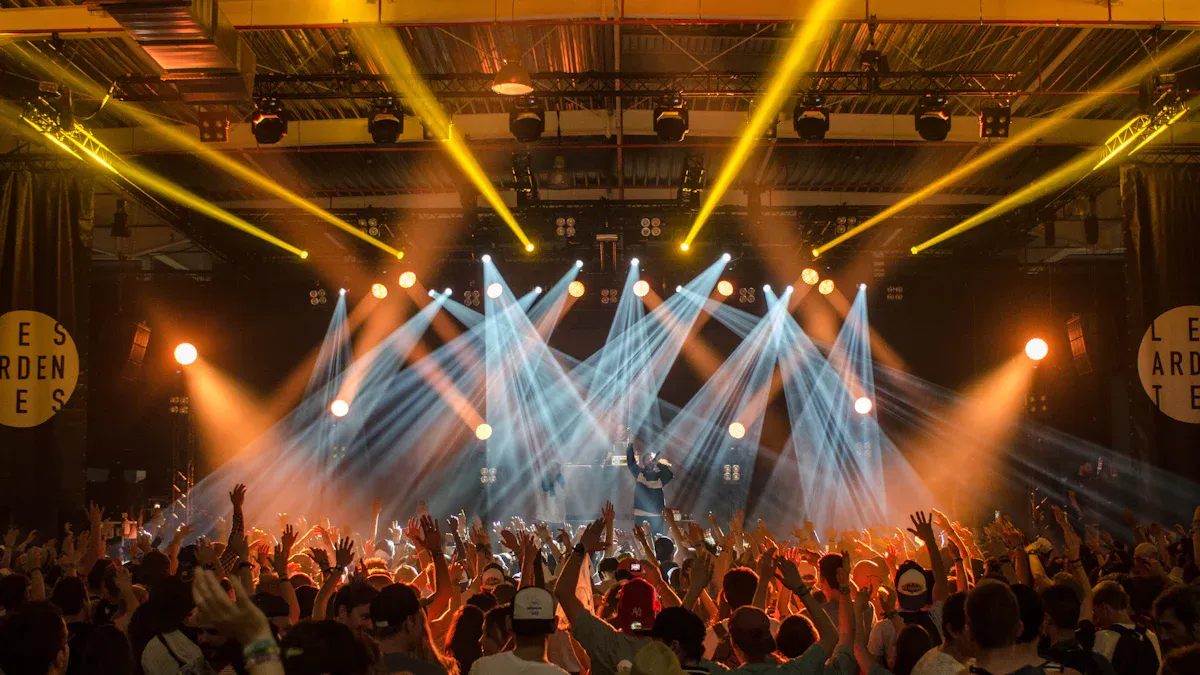
You want to pick the best Moving Head lighting setup for a big live event. You should think about brightness, throw distance, beam angle, dynamic effects, mounting, and DMX control. Many large places use Moving Head lighting. It makes up about 29% of stage lighting setups. Other popular lighting types are:
- LED fixtures: over 61%
- PAR lights: 23%
- Follow spots: 14%
- Strip lights: 19%
When you pick a setup, you may face some problems:
- Matching fixtures to venue size
- Thinking about event type
- Checking programming skills
- Keeping costs low
You can make smarter choices when you know these things.
Key Takeaways
- Think about how big the place is and its shape when picking lights. Make a map to help plan where to put each light for the best look.
- Pick lights with the right brightness and how far they can shine. Bright lights are needed for outdoor shows so people can see them in sunlight.
- Pick beam angles that work for your show. Narrow angles put light on one spot. Wide angles spread light over bigger spaces.
- Add cool effects to make your show better. Use moving lights and mix colors to match the show’s energy.
- Make sure you can control and set up the lights well. Use DMX systems to manage the lights during the event.
Moving Head lighting: Key Factors
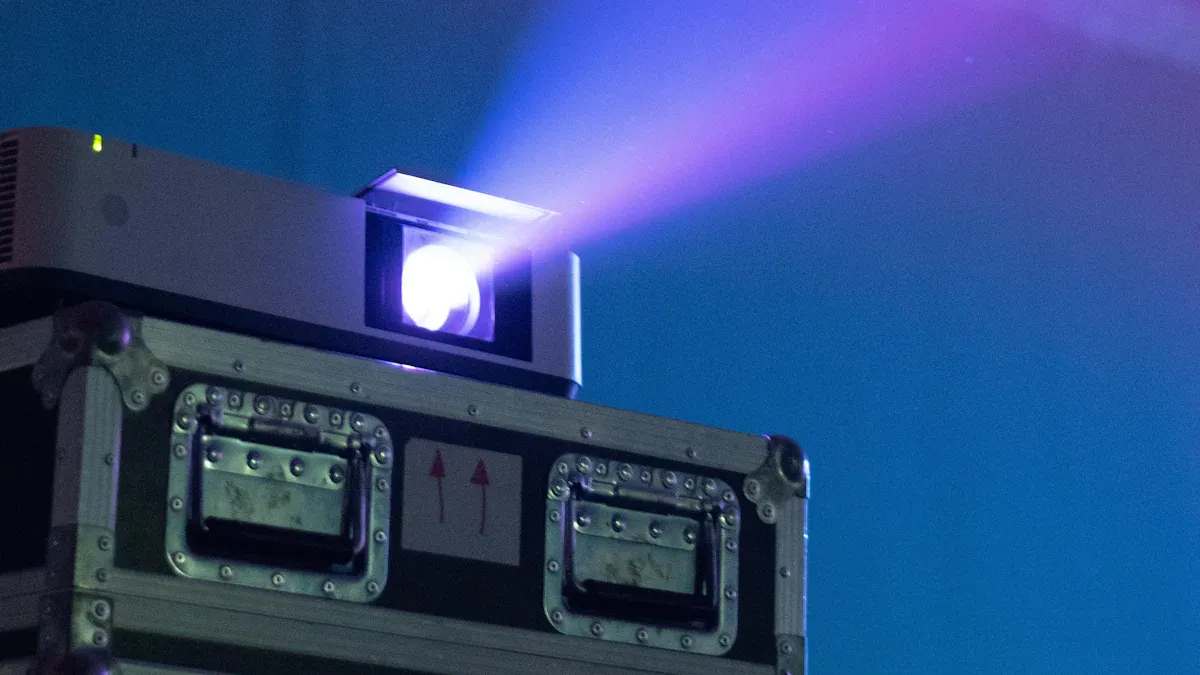
Venue Size & Layout
Look at how big and what shape your venue is. Big places like stadiums need lights that reach far and cover a lot. Small places like clubs need lights that focus on certain spots. You should draw a map of the stage and where people sit. Mark any things that might block the light. This helps you know where to put each light for the best effect.
Brightness & Throw Distance
Your lights must be bright so everyone can see. Outdoor events need lights that shine far and stay strong. These lights work well even in sunlight or big open spaces. High brightness helps your lights show up against daylight. Indoor events can use lights that do not need to shine as far. Long throw distance and sharp focus make outdoor lighting clear.
- Lights that shine far and strong keep outdoor events bright.
- High brightness helps your lights stand out in sunlight.
- Long throw and sharp focus give clear, wide light outdoors.
Beam Angle Selection
Pick the right beam angle for your lights. Beam angle means how wide or narrow the light spreads. Big venues need narrow angles for long-distance lighting. Wide angles are good for covering large areas. Using both types helps you avoid shadows and get even light.
- Narrow angles make sharp, cool effects and focus on spots.
- Wide angles fill big spaces and make things look lively.
- Wide angles give even light but less brightness in one spot.
- Narrow angles give more brightness in one spot but less even light.
Sharpy lights use narrow angles for cool effects at concerts. Their beams make shows more fun for the crowd.
Dynamic Effects & Movement
You can make your show more fun with moving lights and effects. Moving Head lighting adds action and energy to the stage. You can use things like beam shaping, mixing colors, quick moves, and gobo projection. These effects help your lights match the music.
| Dynamic Effect | Description | Benefit |
|---|---|---|
| Beam Shaping | Changes the shape of the light beam | Makes the look special |
| Color Mixing | Blends colors for cool scenes | Sets the mood |
| Fast Position Changes | Moves lights fast to follow the action | Keeps people watching |
| Gobo Projection | Shows patterns and textures | Adds creativity |
Control & Programming
You need a good system to control your Moving Head lighting. Most pro setups use DMX512, which can handle up to 512 channels. You can control lots of lights with more universes. Each channel lets you change things like color and position from 0 to 255. If you are new, start with fewer channels like 16 for easier control.
- DMX512 can handle up to 512 channels per universe.
- Moving head lights use 16, 20, or 24 channels.
- DMX can control many lights with more universes.
- Each channel lets you control lighting details.
Advanced programming lets you set up your lights before the show or control them live. You can make lights move with the music. This helps you make cool designs and smooth shows. You can save time and make effects more exact by programming automatic moves.
Moving Head lighting Types
Beam Fixtures
Beam fixtures make thin, strong beams of light. They are great for making bright effects in fog or haze. These lights work well at concerts and outdoor events. You can see the beams move across the stage or crowd. Large venues use beam fixtures because they shine far and stay bright.
Spot Fixtures
Spot fixtures help you control where the light goes. You can shine light on one person or a special moment. Spot fixtures use gobos to show patterns or shapes. Here are ways to use spot fixtures in big shows:
| Application Type | Description |
|---|---|
| Highlighting solo performances | Spotlights focus on one performer so people can see them better. |
| Creating a dramatic focal point | They light up one area to get the audience to look there. |
| Enhancing visibility of performers | Spotlights help the audience see what performers do and feel. |
- You can shine light on lead actors during important times.
- You can light up certain scenes in plays.
- You can follow dancers as they move.
Wash Fixtures
Wash fixtures cover the stage with soft, even light. They help set the mood and make the background colorful. Wash fixtures make the whole stage look bright and fun. They give smooth lighting that makes the stage look nice. You can use colors to match how the show feels. Wash fixtures change fast, so you can switch the stage look quickly.
Tip: Lighting changes how people feel. Use bright, dim, or colored wash lights to fit the mood of the show.
Hybrid Fixtures
Hybrid fixtures mix beam, spot, and wash effects in one light. One fixture can do many jobs, so you save space and time. Hybrid fixtures are good for tours and places with little room. They are flexible for rentals and shows that need different effects. They cost more at first, but you need fewer lights.
- Hybrid moving head lights mix beam, spot, and wash effects in one.
- They are flexible for rentals and touring shows.
- The higher price is okay because you need fewer lights.
Specialty Fixtures
Specialty fixtures help you make cool visual effects. Moving heads can move, change colors, and show gobo patterns. PAR cans give strong color washes to set the mood. Fresnels make soft light for gentle front lighting. These lights help you add drama and creativity to your show.
Selection Process
Assessing Needs
First, you need to know what your event needs. Lighting does more than help people see. It sets the mood and makes moments stand out. Good lighting keeps people interested.
Event lighting is more than just making things bright. It helps with branding and telling stories. It also keeps the audience focused. The right lighting can change how a place feels. It can show off important things and make the event better.
Here are steps to help you figure out your needs:
- Look at the space you want to light. Find out how big the venue is. Check the seats and stage layout. See where you need more light and where shadows might be.
- Make a lighting plan. Write down what gear you need. Decide when and where to put each light. Draw a map to see everything clearly.
- Make sure you have enough power. Check if the venue can handle all your lights. Think about using a backup generator for safety.
- Pick colors and tones that fit your event. Colored lights help set the mood and guide people’s eyes.
Lighting helps set the mood and makes things look nice. It shows off important parts and makes the show better for everyone. Each performer should have their own light. Add side lights to make the stage look brighter and fuller.
Comparing Fixtures
You need to look at different fixtures to find the best ones. Lighting designers put fixtures into groups. Moving lights are good for cool effects. RF fixtures let you control lights without wires. Par cans make strong beams for dramatic looks. Knowing these types helps you pick the right lights for each part of your event.
| Fixture Type | Best Use Case | Special Feature |
|---|---|---|
| Moving Lights | Dynamic effects, flexibility | Fast movement, color mix |
| RF Fixtures | Wireless control | Easy setup, remote use |
| Par Cans | Strong beams, color washes | Simple, powerful output |
Check what each fixture can do. Think about how bright they are. Look at beam angle, movement, and effects. Pick fixtures that fit your event and make it look good.
Control System Integration
You need to connect your lights to a control system. This lets you change colors and move lights during the show. Put your lights where they cover the stage well. Avoid things that block the light. Use good DMX cables and label them. Make sure your power supply is steady. A UPS can keep your lights safe from power problems.
- Put lights where they cover the stage best.
- Use safety cables and strong mounts.
- Keep cables neat and labeled.
- Make sure there is good airflow to stop overheating.
- Put the control panel where you can reach it fast.
- Wireless options give you more ways to set up.
Control system compatibility is important for big shows. Protocols like DALI and ZigBee help lights work together. Open protocols let you use lights from different brands. This makes it easy to add more lights later. Decentralized systems let you add or remove devices without a main controller. Wireless mesh networks help keep costs low and make upgrades easy.
Mounting & Configuration
Mounting your lights safely is very important. Use clamps and safety cables that are certified. Make sure the truss can hold all the lights. Attach each light with two safety points: a main clamp and a backup cable. Spread your lights across circuits so you do not overload them.
- Truss mounting works well in big places. It lets you put lights exactly where you want.
- You can add more lights to the truss for a pro look.
Check the truss load before you start. Spread the weight out evenly. Always use hardware that is rated for mounting. Secure each light with a main clamp and a backup safety cable.
Safety & Rigging
Safety is the most important thing when you set up Moving Head lighting. If you rig lights wrong, they can fall or cause electrical problems. Safe mounting keeps everyone safe and helps your event go well.
Always use at least one rated safety cable between the light and the truss. For lights above people, use extra attachments. Never use straps made of elastic or fabric. Use steel cables, chains, or certified slings for overhead lights.
- Emergency plans should include quick ways to turn off power for fire or smoke.
- Have safe ways to lower stuck hoists.
- Make a rescue plan for people working up high.
- Use two safety cables or extra attachments for lights above people.
- Mark where to cut power in an emergency.
Tighten clamps to the right tightness. Use a second lock if needed. Connect a safety cable to a different spot on the truss. For setups that stay up a long time, use two clamps or extra attachments to lower risk.
If you follow these steps, your Moving Head lighting will be safe and ready for any big live event.
Pro Tips for Large-Scale Projects
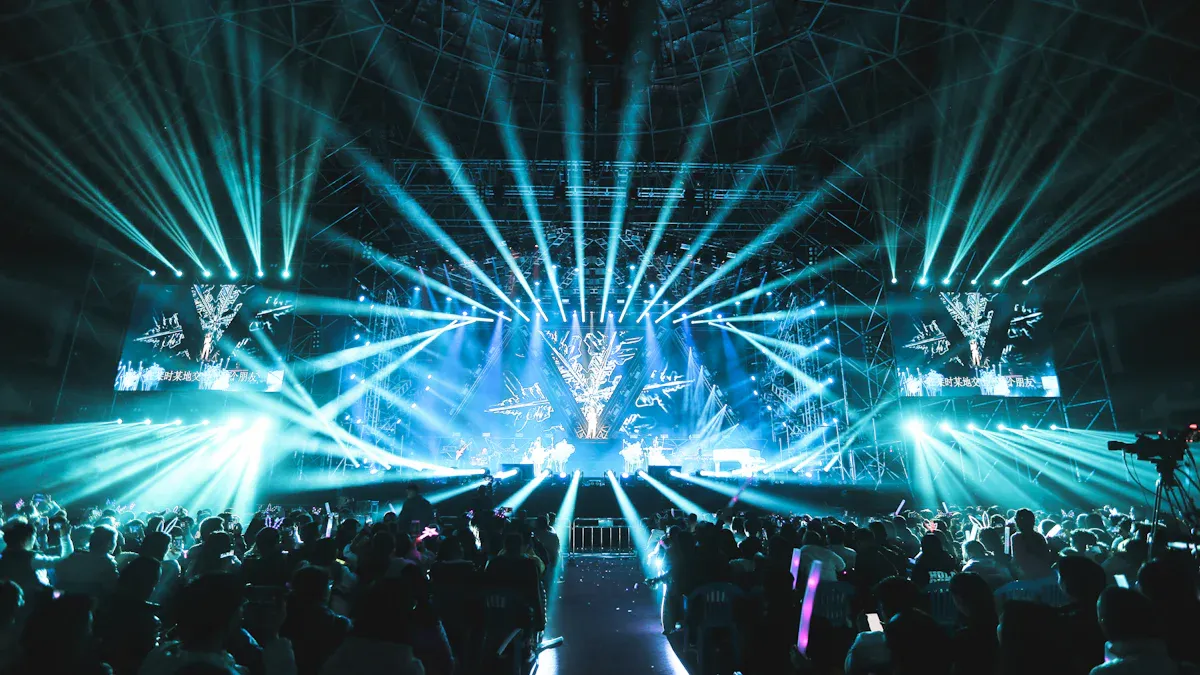
Energy Efficiency
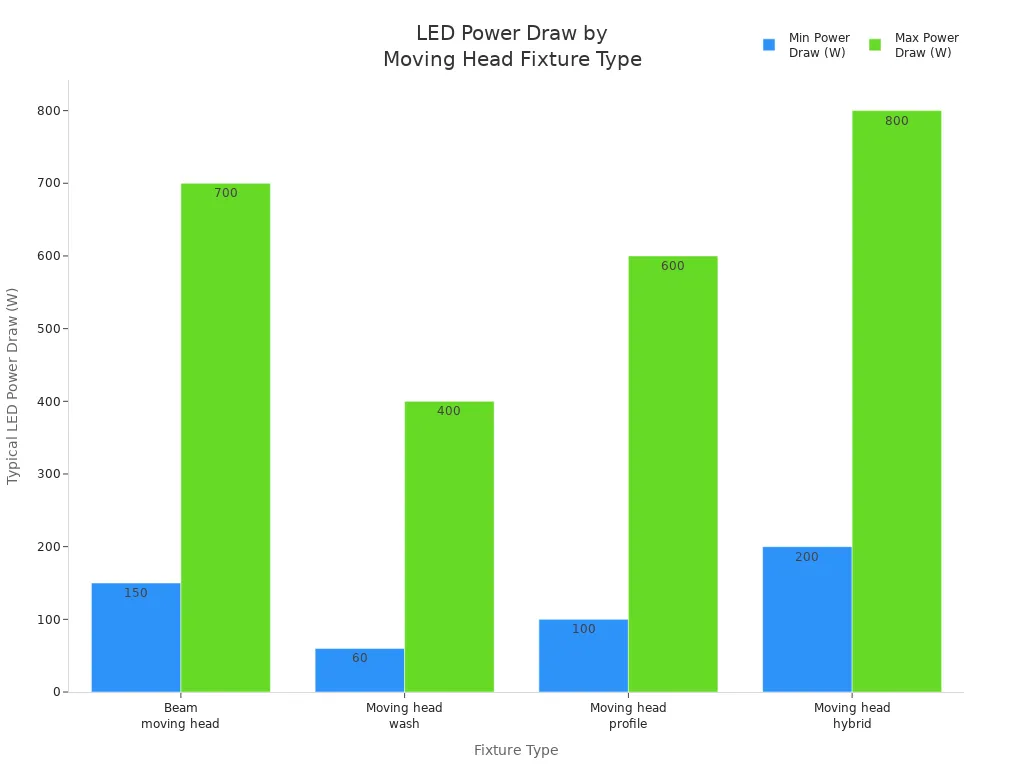
You can save energy and money by picking LED fixtures. Most moving head lights today use less power than old ones. The table below shows how much power each type uses:
| Type | Typical LED Power Draw (W) | Typical Use | Notes on Efficiency |
|---|---|---|---|
| Beam moving head light | 150–700 | Long, narrow shafts, arena effects | High-output LEDs; older units used 1,000+ W |
| Moving head wash light | 60–400 | Broad wash, color blending | Most efficient per lumen due to wide optics |
| Moving head profile (spot) | 100–600 | Sharp beams, gobo projection | Modern LEDs match older discharge types |
| Moving head hybrid | 200–800 | Multi-function fixtures | Power varies by mode; peak draw in full mode |
Tip: Use lights with lower wattage for background washes. Save the brighter ones for special effects.
Maintenance Planning
You can make your lights last longer with good care. Follow these steps to keep your fixtures working well:
- Clean lenses and inside parts often to stop dust.
- Check for loose screws and tighten all connections.
- Look at cooling fans to stop overheating.
- Keep the area cool and dry to avoid damage.
- Do not run lights at full power for too long.
- Clean your lights to keep them bright and safe.
- Control heat to help LEDs last longer.
- Do not turn lights on and off too much.
Note: Store your lights in a cool, dry place. This keeps them safe from dust and heat.
Troubleshooting
You might have problems during live shows. Quick checks help you fix things fast:
- If a light does not turn on, check the power and plug.
- For DMX problems, check the DMX address and cables. Test the light alone if needed.
- Clean vents and fans to stop overheating.
- If a light flickers, use a DMX terminator and do not use microphone cables for DMX.
- If a moving head does not work, check the DMX patch and pan/tilt settings.
Example: At a theater, a light got dim because dust blocked the vent. Cleaning fixed it. At a festival, voltage changes made a bulb explode. Using voltage stabilizers stopped this from happening again.
You can fix most problems with simple checks and cleaning. Always keep extra cables and tools close for quick repairs.
Decision Checklist
Fixture Choices
You need to check several things before you pick your lights. Use this list to help you:
- Confirm the beam angle range. For concert shafts, a range between 2° and 6° works best.
- Review the photometric lux data at the throw distances you need.
- Check the source type and LED lifetime. Most LEDs last between 30,000 and 50,000 hours.
- Verify the pan and tilt range. Make sure the movement is smooth and covers enough area.
- Inspect color mixing and gobo or prism options. RGBW color mixing and gobo wheels add more effects.
- Compare the power draw. Make sure the lights fit your power plan and are easy to use on tour.
- Review the warranty and spare parts. You want quick repairs if something breaks.
- Ask for demo videos or in-person tests. See the lights in action before you buy.
Tip: Look for lights with a noise level below 35 decibels. Quiet lights help keep the show focused on the performance.
System Integration
You must make sure your lights work with your control system. Check these points:
- Confirm the lights support DMX512, RDM, Art-Net, or sACN protocols.
- Make sure the lights match your current control desk or software.
- Use high-quality DMX cables and label them for easy setup.
- Test the lights with your system before the event.
- Choose lights with good build quality and durability. Waterproof models work better for outdoor shows.
A good system setup helps you control every effect and color change during the show.
Compliance
You need to follow rules and safety standards. Always check these items:
- Validate that your lights have the right certifications for your market.
- Make sure the truss and rigging hardware meet safety codes.
- Review local rules for electrical safety and emergency plans.
- Keep all manuals and certificates ready for inspections.
Note: Following safety and compliance rules keeps your team and audience safe.
You can make your show amazing with the right lighting. Always pick lights that fit your event size and needs. Use the checklist to help you choose and feel sure about your choices. A good team helps you fix problems and keeps things working well.
- Moving head lights are flexible and work well for concerts and business events.
Here are steps to help you succeed:
- Put your lights where they cover the stage best.
- Make sure each light is safely attached.
- Hook up power and DMX controllers.
- Set up movements and effects before the show.
Tip: Try your setup at the event place or ask lighting experts for help.
FAQ
What is the best way to control Moving Head lights at a live event?
You should use a DMX controller. This tool lets you change colors, movement, and effects quickly. You can program scenes before the show or adjust them live.
How do you choose the right beam angle for your venue?
Check your venue size. Use narrow angles for long distances and sharp effects. Pick wide angles to cover large areas. Test both types to see which fits your event.
Can you use Moving Head lights outdoors?
Yes, you can use them outdoors. Pick waterproof models for safety. Make sure your lights have enough brightness to stand out in sunlight.
How often should you clean and maintain Moving Head fixtures?
You should clean your lights every month. Check for dust, loose screws, and blocked vents. Regular care keeps your lights bright and safe.
