
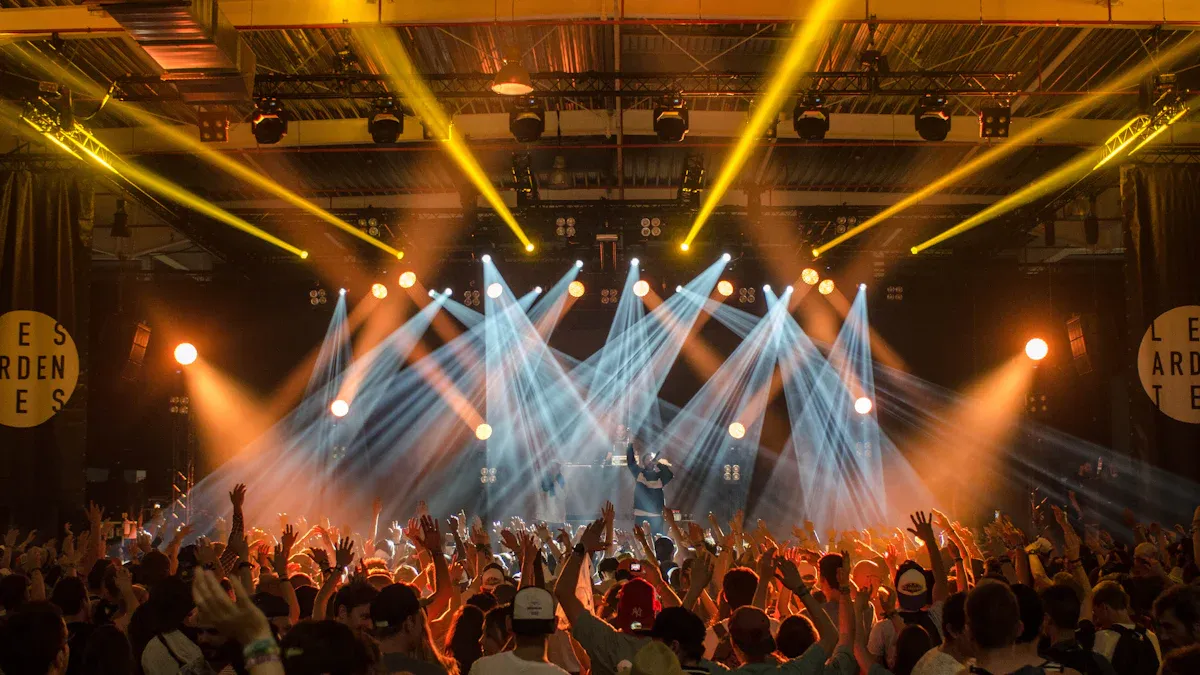
Stage lighting equipment can change how your audience sees a show. The right lights help you stand out. They also make your show more fun. Many places now use automated and intelligent lighting systems. These systems help the audience enjoy the show more. They also save energy.
- Over 70% of big events use automated lighting. This helps people see better and enjoy more.
- Almost 65% of theaters use intelligent lighting. This makes shows look better and saves money.
You have many choices to make your stage brighter. The table below shows some popular types. These are used in theaters and concerts:
| Type of Lighting Equipment | Description |
| LED Lighting | Saves energy and can be used in many ways. |
| Conventional Lighting | Old setups, still used but new ones are taking over. |
| Moving Lights | Used in live shows, they make cool visual effects. |
| Control Systems | Help you change and manage lights easily. |
| Special Effects Lighting | Make special looks and add to the mood. |
Think about how the right lights can help you look great on stage. Good lighting can make your event one to remember.
Key Takeaways
- Pick the best stage lighting for your show. Good lighting lets people see and enjoy the show.
- Think about your event when you pick lights. Different shows need different lighting to look their best.
- Use LED fixtures to save energy. They give bright colors and help lower power bills.
- Plan where you put your lights. Good placement adds depth and shows important moments on stage.
- Take care of your lights often. Clean and check your equipment before every show to keep it safe and working well.
Types of stage lighting equipment

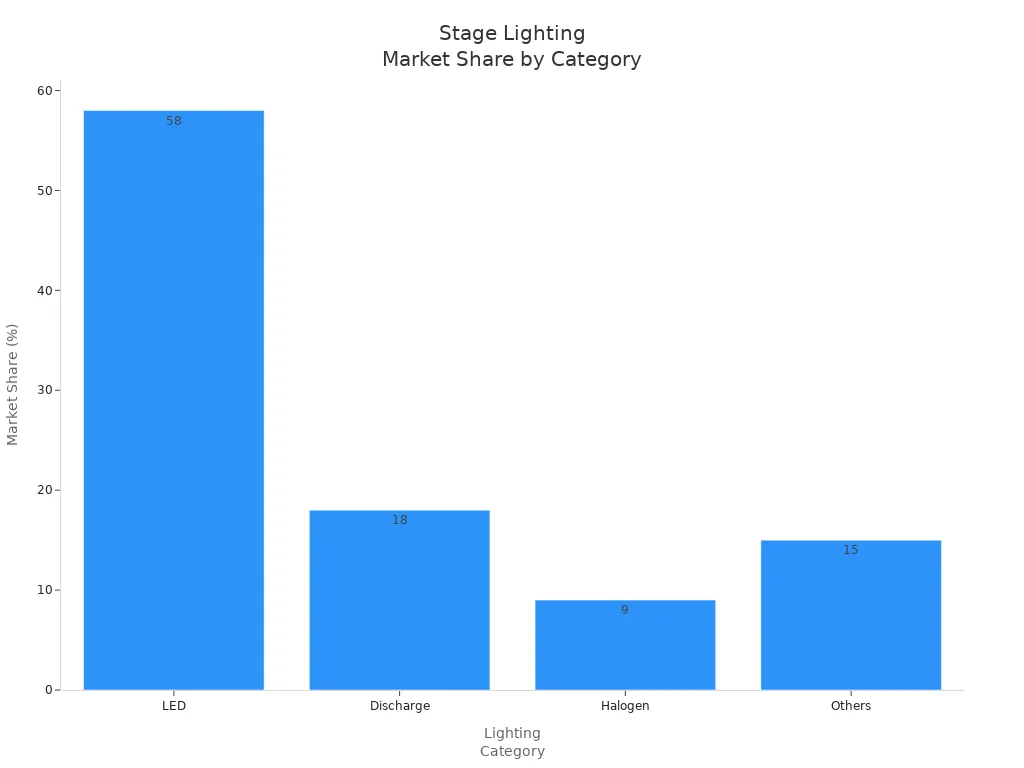
When you choose stage lighting equipment, you can pick from many types. Each type helps you create a different look and feel on stage. The table below shows the main categories you will find in the market today:
| Category | Description | Market Share | Key Features |
| LED | Energy-efficient lighting with a long lifespan and dynamic capabilities. | ~58% | Instant color mixing, low energy use, popular in theater and concerts. |
| Discharge | High-lumen output lights used in large venues. | ~18% | Broad beam coverage, less common now due to environmental concerns. |
| Halogen | Traditional lighting with a short lifespan, now less common. | ~9% | High heat, mostly found in older theaters. |
| Others | Includes fiber-optic and laser systems. | ~15% | Used in special events, with new hybrid models appearing. |
You can find all these types of stage lighting equipment at online stores like UsedLighting.com and The Stage Lighting Store.
Spotlights and follow spots
Spotlights and follow spots help you highlight people or objects on stage. Spotlights give you a narrow beam of light, usually around 30 degrees. You can use them to focus on one actor or a special prop. Follow spots let you track someone as they move, keeping them bright and easy to see.
- Spotlights work best when you want to draw attention to a single spot.
- Follow spots help you keep moving performers in the light.
| Venue Size | Lumen Output |
| Small theaters (up to 500 seats) | 7,000-15,000 lumens |
| Mid-size venues (500-1,500 seats) | 15,000-30,000 lumens |
| Large arenas (1,500+ seats) | 30,000+ lumens |
Tip: Use spotlights for solos or key moments. Use follow spots for dancers or speakers who move around.
PAR cans and fresnels
PAR cans and fresnels give you broad coverage and help set the mood. PAR cans shine an intense, oval-shaped light that covers large areas. You can use them for washes or to light up the whole stage. Fresnels let you adjust the beam angle, so you can make the light wide or narrow as needed.
- LED PAR cans can create many colors without using gels.
- Multi-chip LEDs let you mix millions of colors for different scenes.
| Light Type | Coverage Description |
| PAR Cans | Intense, oval-shaped light for large areas and ambient lighting. |
| Fresnels | Adjustable beam angles for focused or broad coverage. |
Note: PAR cans work well for concerts and events that need strong, colorful washes. Fresnels help you control the shape and size of your light.
Ellipsoidals and lekos
Ellipsoidals, also called lekos, give you precise control over your light. These lights use a special reflector and lens system. You can focus the beam, change its size, and use shutters to shape the light. This makes them perfect for highlighting certain parts of the stage or creating sharp edges.
- Ellipsoidal reflector collects and directs light.
- Adjustable shutters shape the beam.
- Lens system lets you focus and control the size.
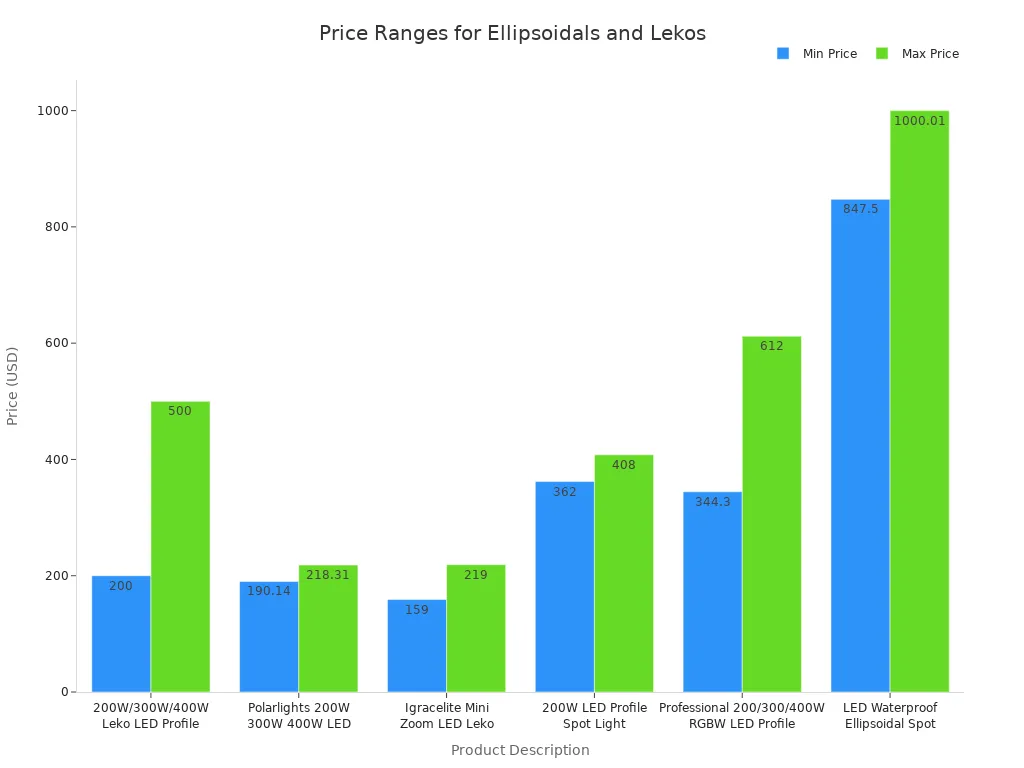
You can find many models, with prices ranging from about $159 to $1,000. Here are some examples:
| Product Description | Price Range |
| 200W/300W/400W Leko LED Profile Zoom Stage Profile Led Spotlight | $200-500 |
| Polarlights 200W 300W 400W LED Stage Lekos Lights | $190.14-218.31 |
| Igracelite Mini Zoom LED Leko Profile Spot Stage Light | $159-219 |
| 200W LED Profile Spot Light Stage Led Ellipsoidal | $362-408 |
| Professional 200/300/400W RGBW LED Profile Ellipsoidal Leko Spotlight | $344.30-612 |
| LED Waterproof Ellipsoidal Spot Light 300W 600W | $847.50-1,000.01 |
LED fixtures and moving heads
LED fixtures and moving heads bring energy and excitement to your stage. LED moving heads let you control angles, colors, and brightness. You can create complex lighting designs that change with the show. These lights can spin, move, and change color quickly. They help you make the audience feel part of the action.
- LED moving heads give you precise control over light direction and color.
- You can use them for effects like spinning patterns or smooth scene changes.
Popular models include:
- Jinx – Great for small stages.
- Cybrid G2 – Reliable for large venues.
- Photon Hybrid – Powerful for stadiums.
- K2 – Wide zoom for big stages.
- Kodiak – Strong wash for bright coverage.
- Blok IP65 – Weatherproof for outdoor events.
Tip: Use moving heads to create dynamic effects and keep your show exciting.
Cyc, strip, and scoop lights
Cyc, strip, and scoop lights help you light up backgrounds and create mood. Cyc lights give you an even wash of color across a backdrop. Strip lights have several circuits, so you can mix colors and create different effects. Scoop lights give you a broad wash, which works well when you need simple, even lighting.
| Light Type | Role in Background Washes and Ambient Lighting |
| Cyc Lights | Even color wash across the backdrop, enhances scenic elements. |
| Strip Lights | Multiple circuits for color mixing and washes. |
| Scoop Lights | Broad wash, good for simple lighting needs. |
| Light Type | Power Requirements | Installation Complexity |
| Strip Lights | Moderate | Moderate |
| Scoop Lights | Low | Low |
Note: Cyc and strip lights work best for colorful backgrounds. Scoop lights are easy to set up and use less power.
Specialty lights: pinspots, blinders, battens
Specialty lights add unique effects to your stage. Pinspots focus a small, bright beam on one object, like a disco ball or a centerpiece. Blinders flash bright light to surprise the audience or mark a big moment. Battens are long bars of lights that you can use for color washes or to outline the stage.
- Pinspots highlight small details.
- Blinders create dramatic effects.
- Battens add color and shape to your stage design.
You can find all these types of stage lighting equipment at online marketplaces. UsedLighting.com and The Stage Lighting Store offer both new and used options, so you can find what fits your needs and budget.
How stage lighting equipment enhances brightness
Key features and benefits
When you pick stage lighting equipment, you want it to fit your show. The right features help make your show bright and fun. Here are some things to think about:
- Venue Size: Big places need strong lights. Small rooms need fewer lights.
- Type of Performance: Plays use soft, focused lights. Concerts use bold colors and moving heads.
- Control System Compatibility: Your lights should work with your control board. This helps you change scenes fast.
- Power and Heat Output: LED lights use less energy and stay cool. This keeps your stage safe.
- Budget: Choose lights that give you good value. Versatile fixtures help you save money.
- Portability and Installation: If you move your setup a lot, pick lights that are easy to carry.
Tip: LED fixtures give you bright colors and use little energy. They work well for most shows.
Best use cases for each type
Different stage lighting equipment works best for certain events. You can match your lights to your show for great results.
- Special effect lights make cool illusions and dramatic moments. Use them for concerts or theater shows.
- Intelligent lights, like moving spots and washes, add excitement. They are good for dance shows and live music.
- DMX controllers and lighting software help you design complex scenes. These tools are great for modern shows.
| Lighting Type | Best Use Case | Benefit |
| Spotlights | Theater, speeches | Focus on key performers |
| Moving heads | Concerts, dance shows | Dynamic color and movement |
| PAR cans | General stage wash | Bright, even coverage |
| Special effects | Musicals, themed events | Unique visual impact |
Creating atmosphere and visibility
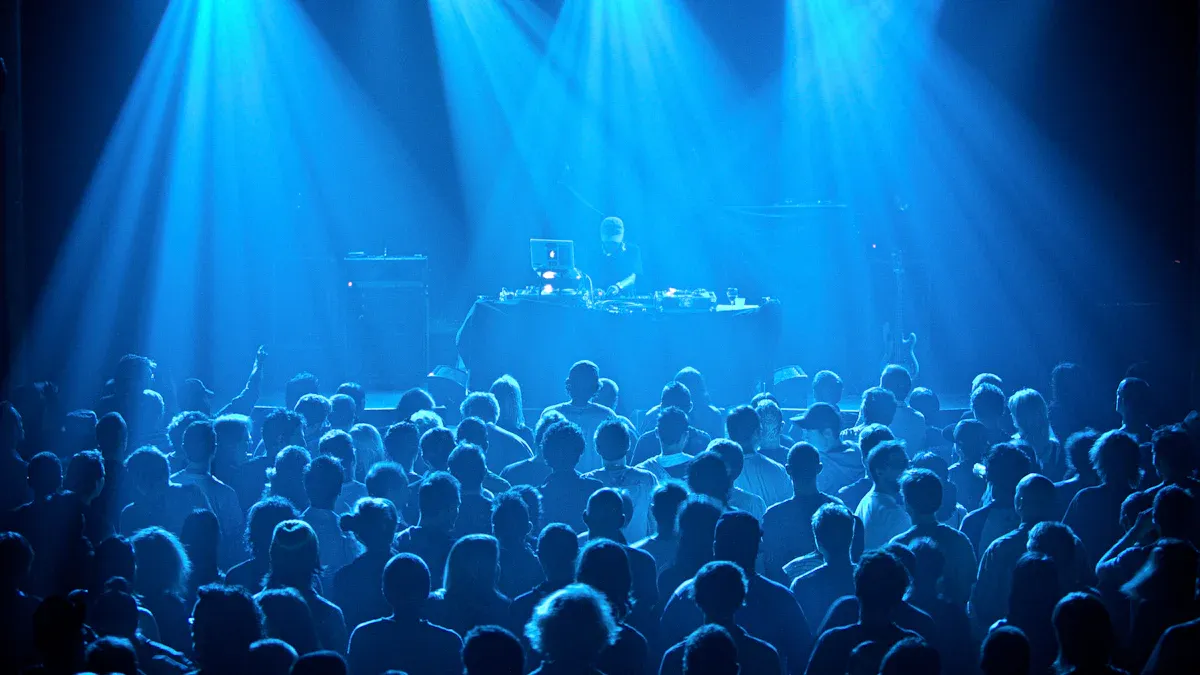
Stage lighting equipment does more than make things bright. It helps you set the mood and guide your audience’s eyes. You can use color and brightness to create feelings, like excitement or calm. Directional lighting shows depth and highlights important actions.
Good lighting helps everyone see the performers and set pieces. It also helps you tell your story by focusing on key moments.
You can use shadows to add dimension. Bright lights make the crowd feel excited. Softer lights make the space feel cozy. When you control color and direction, you shape the mood and keep your audience interested.
Choosing stage lighting equipment
Stage size and layout
You should look at your stage before picking lights. The size and shape of your stage matter a lot. Big stages need strong lights to cover all areas. This helps you avoid dark spots. Small stages need fewer lights, but you still want even lighting. Always think about what your show and space need.
- Measure your stage and look at its design.
- Decide how many lights you need for good coverage.
- Plan for special effects or unique stage parts.
Event type and needs
Different events need different lighting setups. You should match your lights to the event you have. The table below shows how lighting needs change for each event:
| Event Type | Lighting Needs | Purpose of Lighting |
| Live Performances | Makes performers easy to see and helps the audience focus | Sets the mood and helps tell the story |
| Corporate Events | Puts light on speakers and gives soft light for the crowd | Keeps people interested and helps them join in |
| Conferences | Uses spotlights for clear views and soft light for comfort | Helps people see and listen during talks |
You can use bright lights for speakers and soft lights for the crowd. Always set up your lights to match the mood and goals of your event.
Price range and budget
Lighting equipment can cost from $60 to $5,466. You want to get the most for your money. Here are some tips to help you save and get good lights:
- Pick the most important features for your show.
- Compare brands and models to find good prices.
- Buy used lights if you want to save money.
- Pick energy-saving lights for long-term savings.
- Only buy the lights you really need.
- Rent lights if you do not use them often.
You can also look at advanced lights like the Elation Lighting KL Series. These lights are bright, have many colors, and use less power than old lights.
Energy efficiency
Saving energy is very important now. LED fixtures use less power and give bright, true colors. In 2025, most designers will pick LEDs to save energy and money.
The LED Profile Zoom 200 is small, bright, and has great color. It helps you use less energy and still makes your stage look great.
Advanced lights like the Elation KL Series are bright, have many colors, and use little power. These lights help you save money and protect the planet.
Tips for maximizing stage brightness
Light placement strategies
You can make your stage brighter by putting lights in smart places. Each spot for a light does something special. Look at this table to help you plan:
| Lighting Position | Function |
| Front Lighting | Gives even light so people can see well. |
| Side Lighting | Makes things look deeper and shows off shapes. |
| Back Lighting | Helps performers stand out and adds cool shadows. |
| Top Lighting | Covers the stage with light; aim carefully to stop harsh shadows. |
Try these ideas for better lighting:
- Put overhead lights at a 45-degree angle to light faces.
- Place front lights just above eye level to cut down shadows.
- Use side lights to show the edges of performers.
- Add back lights for cool shadows, especially on big stages.
Control systems and effects
Modern control systems help you use your lights better. Smart controls let you change brightness, color, and movement easily. You can make scenes that match your show’s mood.
- Smart systems let you change how bright, what color, and how lights move.
- AI can guess what lights you need for smooth changes.
- LED lights switch colors fast and make cool effects.
- Lights that work together make your show more fun.
- LEDs save energy and money while keeping things bright.
Tip: Use cool lighting effects to make your show exciting and keep people watching.
Maintenance and upkeep
Taking care of your lights helps them work well. Before each show, turn lights on at half power for 30 minutes. Check bulbs to see if they look even and make sure all wires are tight. After the show, let lights cool for 15-20 minutes before unplugging. Cover them to keep dust away.
- Wipe lights with a soft cloth and blow out dust with air.
- Look at cables for damage and use surge protectors that fit your lights.
- Oil moving parts so they don’t wear out.
- Make sure vents are open so air can flow.
- Check wires and fire safety gear often.
- Reset controls and check DMX settings to make sure they work right.
Keeping your lights clean and safe helps them last longer and keeps your stage safe.
You have lots of ways to make your stage brighter. High End Systems, ETC, and VSHOW make lights that are bright and work well. Good LED fixtures give you strong colors and work every time. Pick lights that fit your stage size, event, and how much you want to spend.
Good lighting lets your audience see and enjoy the show.
Look for brands you can trust when you buy:
| Manufacturer | Key Features |
| Robe Lighting | Creative, flexible, and strong for concerts |
| Claypaky | Careful design and artistic style |
| Martin by Harman | Powerful and easy to use controls |
| Chauvet Professional | Many choices and great quality |
Pick the best lights to make your show stand out.
FAQ
What is the most important stage lighting equipment for beginners?
You should start with basic LED fixtures and a simple control board. These tools help you learn how to light a stage. You can add more advanced stage lighting equipment as you gain experience.
How do I choose the right lights for my event?
You need to look at your stage size and event type. Pick lights that match your needs. For concerts, use moving heads. For plays, use spotlights and fresnels.
Can I use stage lighting equipment outdoors?
Yes, you can use many types outdoors. Make sure your lights are weatherproof. Some LED fixtures and moving heads work well outside. Always check the product details before setting up.
How often should I maintain my stage lighting equipment?
You should check your lights before every show. Clean them and look for damage. Regular care helps your stage lighting equipment last longer and work better.
Where can I buy or rent stage lighting equipment?
You can find stage lighting equipment at online stores like UsedLighting.com or The Stage Lighting Store. Many local shops also offer rentals. Compare prices and options to get the best deal.
