
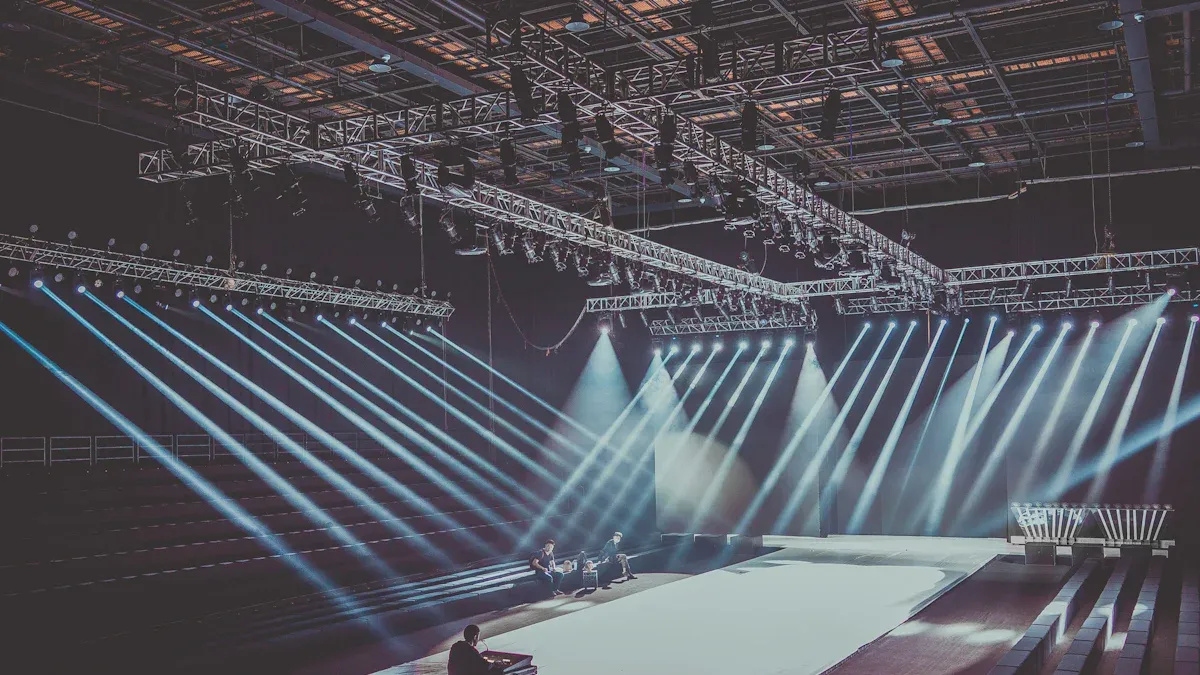
You will see a few main types of stage lighting in plays.
Here is a quick look:
| Type of Lighting | Description |
| Spotlights | These shine narrow beams on one person or spot. |
| Wash Lights | These give wide, soft light to big areas. |
| Beam Lights | These make tight, strong beams for cool effects. |
| Moving Head Lights | These can do spot, wash, and beam jobs. |
| Effect Lighting | These use strobes, lasers, and fog for fun and energy. |
Each type of stage lighting sets the mood, helps people see, and shows where to look. When you know about these types of stage lighting, you can change scenes and make every show look better.
Key Takeaways
- Stage lighting uses many types like spotlights, wash lights, and moving head lights. Each type has its own job to make shows better.
- Lighting changes how a show feels. Warm colors make things exciting. Cool colors can make people feel calm or add mystery.
- Good lighting lets the audience see actors and props well. It also helps people look at the most important parts of the show.
- LED lights are liked because they use less energy, last longer, and can make many colors and effects.
- Using different lights together can make scenes more interesting and help tell the story. Try mixing lights to get the best look.
- Why stage lighting matters
Core functions
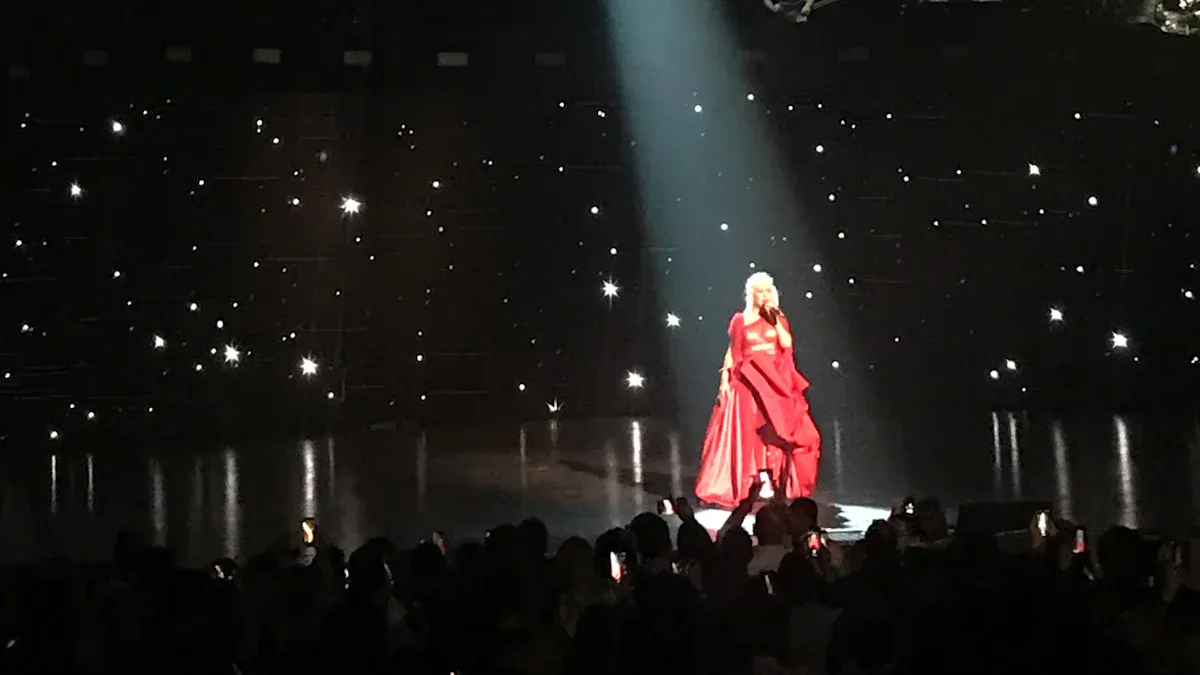
Stage lighting does more than just help us see. The right stage lighting can change every moment on stage. Lighting designers focus on a few main jobs:
| Function | Description |
| Visibility | You help the audience see actors and props clearly. |
| Mood | You set the emotional tone for each scene. |
| Composition | You create a visual picture that guides the audience’s eyes. |
| Plausibility | You make the story feel real, even in fantasy or abstract shows. |
| Reinforcement | You support the script and highlight costumes and scenery. |
Lighting can show if it is day or night by changing colors. You can use lights to show scenery or make the set look different. Sometimes, lighting starts action or shows when something big happens. You can make people look at certain spots by using bright lights. Lighting can also make cool effects and tricks to make the show more fun.
Tip: If you want people to look at something, use spotlights or change colors. These tricks help everyone watch the main action.
Audience impact
Lighting helps actors, but it also changes how the audience feels. Most directors say lighting is very important for setting the mood. Studies show lighting design affects how people feel during a show. When lighting matches the show’s pace, people feel more excited and involved.
- Warm colors make people feel happy or excited.
- Cool colors can make things feel calm or mysterious.
- Bright lights help people stay awake.
- Soft lights help people relax.
Changing lights at the right time can make things tense or dramatic. Spotlights make scenes feel close, and silhouettes make things feel secret. Where you put lights and seats changes how close the audience feels to the show. Good lighting helps you see faces, so you know when people are interested or moved.
Lighting is special for telling stories. Using different stage lighting helps match the mood, show important parts, and make every scene stand out.
Types of stage lighting
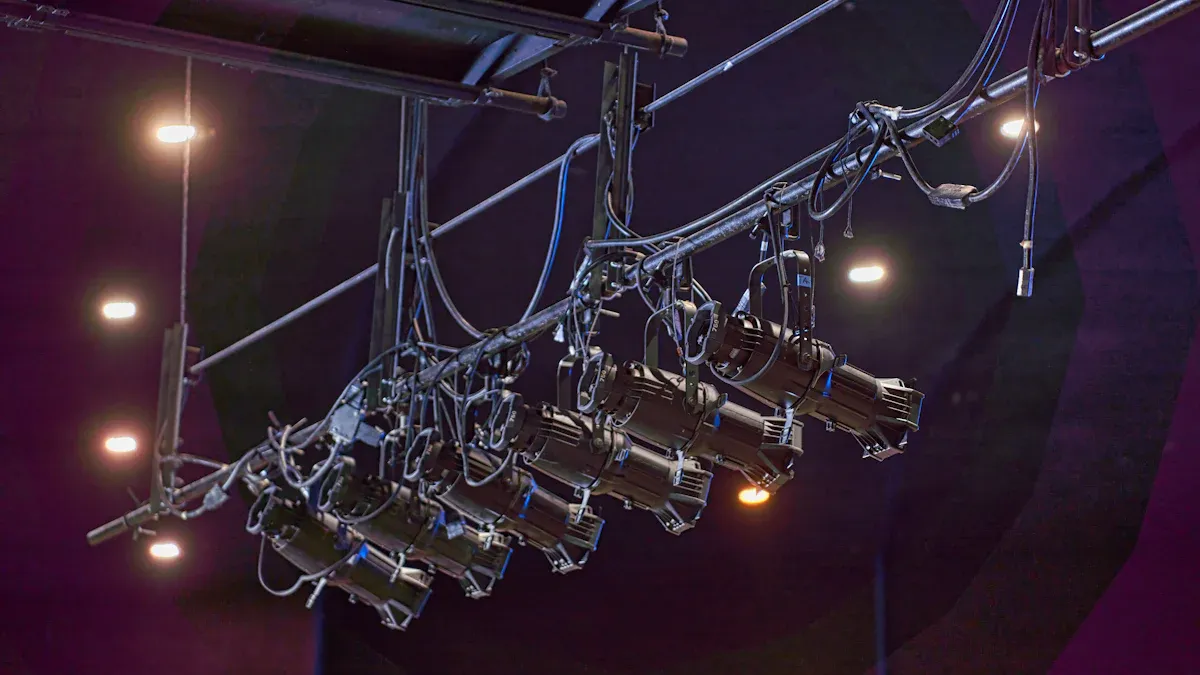
Knowing the main types of stage lighting helps you set the right mood. Each type does something special on stage. Let’s look at each one.
Spotlights
Spotlights help you show one person or area. You use them to make actors stand out in big scenes. Spotlights have a strong beam you can point anywhere. This makes them great for solos or speeches.
| Feature/Application | Description |
| Concentrated Beam of Light | Spotlights make a focused beam. This helps people pay attention. |
| High Intensity | They are very bright, so you can see well on stage or in movies. |
| Directionality | You can aim spotlights exactly where you want. This lets you make cool effects in shows. |
| Highlighting Performers | Spotlights help the audience notice actors in important parts. |
| Dynamic Lighting Effects | Moving head lights and spotlights can move and change. This matches the music or dance. |
Tip: Use spotlights when you want everyone to look at one person or action.
Ellipsoidal (Leko)
Ellipsoidal lights, or Lekos, give you a sharp beam. You can change the shape with shutters or add patterns with gobos. These lights use less power but are still bright. You can add color gels to change how things look.
- Lekos give you a strong beam for actors or scenery.
- You can use Lekos to show designs and colors.
- You can control where the light goes and its shape.
- Lekos stay cool, so gels and gobos last longer.
- Lekos help you show important parts of the story.
Fresnel lights
Fresnel lights make soft, even light. You use them to light big areas or blend light across the stage. The edges are soft, so you do not see sharp lines.
| Stage Scenario | Description |
| Theater Productions | Use Fresnels to light up groups or single performers. |
| Film | They work well for three-point lighting and making silhouettes. |
| Ambient Lighting | Fresnels give even light everywhere. |
You can make the beam narrow or wide by moving the lamp. Fresnels are good for lighting the front or back of the stage.
PAR cans
PAR cans are simple and strong lights. You see them a lot in concerts and theaters. The beam is oval, and you can turn the lamp to change its direction.
| Feature | Description |
| Design | PAR cans are tubes with a shiny reflector. |
| Light Output | They make a bright, oval beam. |
| Common Uses | People use them in shows, clubs, and restaurants. |
| Color Customization | You can add colored gels for different looks. |
| Versatility | PAR cans are good for backlighting, color washes, or quick spotlights. |
| Beam Adjustment | You can move or turn the lamp to change the beam. |
You can use PAR cans for lighting from behind, making colors, or as a fast spotlight.
Floodlights
Floodlights light up big areas with bright, even light. You use them for scenery, backgrounds, or large groups. Floodlights do not focus on one spot. They fill the whole stage so everyone can see.
Note: Floodlights are best when you need to light up everything on stage.
Cyc lights
Cyc lights help you light the background, like cycloramas. You can use them to make sunsets, skies, or any mood.
- Cyc lights make the background smooth and even.
- You can add effects, logos, or pictures.
- Cyc walls can look like outdoor scenes with the right lights.
Light the background separately from the actors. This helps you control how both look.
Strip lights
Strip lights are long bars with lots of bulbs or LEDs. You put them at the top or bottom of the stage to light backgrounds or scenery. Strip lights are easy to use and control.
- LED strip lights save energy and last longer.
- You can shape and color them for cool effects.
- They make bright colors and fun patterns.
- Strip lights are safe and do not get hot.
- You can control them with boards for fast changes.
Moving lights
Moving lights, or intelligent lights, can pan, tilt, and change color or shape. You control them with a board or computer. Moving lights make cool effects and follow actors as they move.
Moving head lights can mix colors, show patterns, and zoom in or out. You can use them for soft washes or sharp spotlights. They make shows more exciting and match the music or action.
Callout: Moving lights add energy and surprise to concerts, plays, and events.
LED lights
LED lights changed how we light stages. They use less power, stay cool, and last longer. You can program them to change color and pattern fast.
- LEDs last longer, so you do not need to replace them often.
- They do not get hot, so they are safer.
- You can make many colors and effects with controls.
- LEDs help you design cool lighting scenes for any show.
LEDs work for all kinds of stage lighting, from spotlights to strips.
Special effects
Special effects lighting adds magic and fun to your show. You can use blacklights, fog machines, lasers, and more to make moods or tricks.
| Type of Lighting | Impact on Audience Experience |
| Blacklights | Make things glow and look strange or spooky. |
| Fog and haze machines | Add mystery and make light beams easy to see. |
| Lasers and projected images | Make moving patterns, fake scenery, and cool effects. |
| Intelligent lights with moving heads | Follow actors and add movement. |
| LED pixel mapping technology | Make colorful displays that match video or music. |
| Enhancing mood and atmosphere | Set the mood with color and brightness. |
| Creating illusions and magic | Make things look magical or dramatic. |
| Simulating environments | Show weather, time, or places. |
| Emphasizing key moments | Make important parts stand out. |
| Complementing other design elements | Work with sound and scenery for a full show. |
Special effects can make people feel excited, scared, or amazed. Always use them to help tell the story, not just for fun.
Tip: Try mixing different stage lights for the best show. Using spotlights, washes, and effects together makes your show special.
Comparison
Differences
You will notice that each type of stage lighting works in a special way. Some lights give you a soft, wide glow, while others create sharp, focused beams. The table below shows how spotlights, Fresnel lights, and PAR cans compare in beam quality and control:
| Feature | Fresnel Light | Spotlight | PAR Can |
| Beam Quality | Soft, even wash | Sharp, focused beam | Bright, oval-shaped |
| Beam Control | Adjustable focus | Precise shaping | Limited, by lamp angle |
Spotlights help you highlight one actor or area. Fresnel lights give you a gentle wash for groups or backgrounds. PAR cans work well for bold color and simple effects. You can use ellipsoidal reflector spotlights when you want strong, customizable light. Followspots let you track actors as they move. Cyc and strip lights cover backdrops and set the mood with color.
Choosing the right type
You should always match your lighting to your stage and show needs. Here are some tips to help you choose:
- Learn your venue. Check the layout, ceiling height, and where you can plug in lights.
- Pick the best fixtures for your event. Spotlights work for solos, wash lights fill the stage, and LED panels add color.
- Try uplighting and downlighting to change the mood.
- You can also look at what each lighting type does best:
| Lighting Type | Best Use |
| Beam Moving Head Lights | Focused beams for performers |
| Wash Lighting Fixtures | Even light for the whole stage |
| Effect Lights | Strobes and lasers for excitement |
If you want to match your concert’s style, think about the effects you need. You can ask lighting experts for advice or rent lights that fit many uses. When you know the types of stage lighting, you can mix them to create the perfect look for any show.
Tip: Try different lights together. You will see how each one changes the scene and helps tell your story.
New trends
LED technology
LED technology is used a lot in stage lighting now. Many theaters use LEDs because they save energy and last longer. You can make more colors and effects with LEDs. LEDs use much less energy than old lights. This helps you save money and helps the planet. The LED stage lighting market is growing quickly. High-end setups grow by 25% each year. Theaters save 15-20% on energy costs.
| Advantage | Description |
| Energy Efficiency | Uses less power, lowering costs for big events. |
| Longer Lifespan | Lasts much longer, so you change bulbs less often. |
| Color Customization | Gives you more color choices for creative designs. |
| Reduced Heat | Stays cool, making the stage safer and more comfortable. |
LED lights cost more at first. But you save money later because they last longer. LEDs need less fixing and do not break often. You spend less on repairs. They are good for touring shows because they can handle bumps and movement.
Mixing digital technology with regular lighting is changing theater. It lets designers use new ideas and tools.
Intelligent lighting
Intelligent lighting lets you control lights in new ways. You can move lights, change colors, and adjust brightness with computers. This helps you match the mood of each scene. Intelligent lights also keep the stage tidy. You need fewer cables and stands.
| Benefit | Description |
| Enhanced Flexibility | Move and reconfigure lights without rewiring. |
| Energy Efficiency | Smart controls and LEDs use less power. |
| Reduced Clutter | Fewer cables mean a safer, cleaner stage. |
| Dimming Technology | Lights dim automatically to save energy during quiet scenes. |
| Sustainability | Helps theaters meet green goals while making shows look better. |
You can connect intelligent lights to digital systems for better control. This lets you make scenes that change and even match lights with music or video. Designers use video projections and interactive content with lighting. This makes shows more fun and interesting.
Designers use video projections and interactive content as key parts of lighting designs.
LED and intelligent lighting give you more choices. They save energy and help you make cool stage effects. These new trends are changing stage lighting for the future.
You now know the main types of stage lighting and how each one shapes your show. Always match your lighting to your venue size, performance type, and budget. Start with a few quality fixtures and make sure your control system fits your needs. Avoid lighting mistakes by giving each cue a clear purpose and practicing your timing. If you want to learn more, explore books like Scene Design and Stage Lighting or try hands-on experiments with color and pattern. Keep exploring—your creativity will shine brightest when you keep learning.
FAQ
What is the best stage lighting for a small theater?
You can use LED spotlights and Fresnel lights. These lights save energy and give you good control. You get bright colors and soft washes. LED fixtures also fit small spaces well.
How do you control stage lights during a show?
You use a lighting console or computer. This device lets you change brightness, color, and movement. You can program cues before the show. You press buttons to trigger each lighting effect.
Can you mix different types of stage lights?
Yes, you can mix spotlights, washes, and effects. Mixing lights helps you create depth and mood. You highlight actors and set the scene. Try different combinations to see what works best.
Why do LED lights work better for stage lighting?
LED lights last longer and use less power. You get many color choices and quick changes. LEDs stay cool, so they are safer for performers. You also save money on repairs and replacements.
